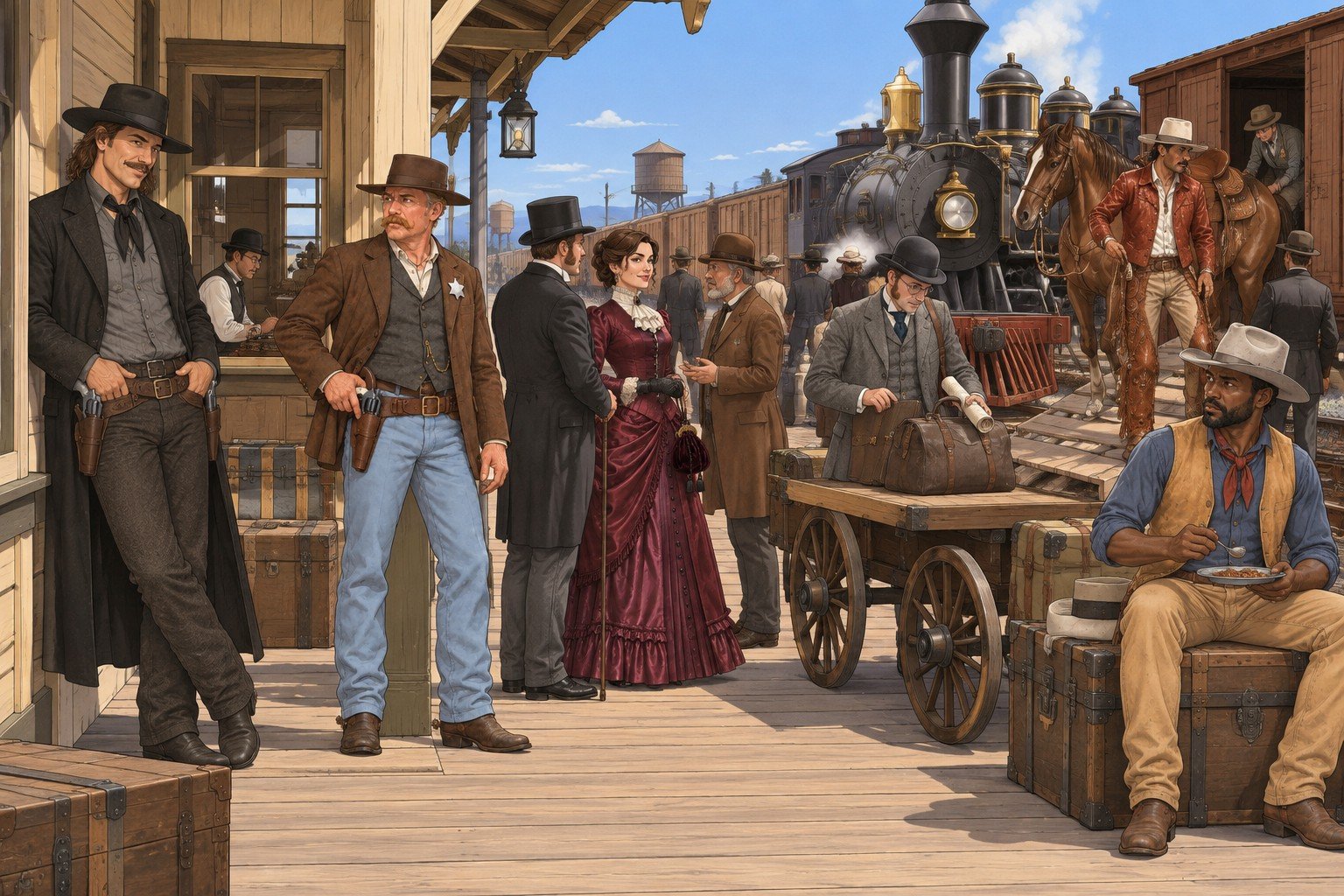
This chapter has three parts. Travel at the Table gives the real routes of the corridor with distances, times, fares and stops, and says how news and mail move. Places Outside the Two Cities gives short entries for real forts, towns and agencies a party can be sent to. Campaign Tools gives a campaign frame, the dates to use, rumors, road and depot tables, two journey outlines, ordinary-person role templates and a hooks table keyed to the Era Cast and to the powers in Factions and Powers. Cheyenne and Denver have their own chapters; this chapter does not repeat them.
Facts carry a year and a source; a table value is a figure set for play, not a historical claim, and is labeled as one. Prices are in dollars, as in Gear and Prices.
Part One: Travel at the Table
How Travel Works
Ordinary travel is a sentence, not a procedure. The party says where it is going; the GM says how long it takes and what it costs; the game resumes at the first scene that matters. A character's ordinary living expenses cover food, feed and lodging on the main roads (Gear and Prices, Keeping a Horse), and this chapter adds no daily bookkeeping to that.
TERMS: A Day's Travel
(The animal rates are The Stable's*; the rail and foot rates are table values.)*
- Mounted, wagon, team. Use the animal's Travel (miles a day on a road) from The Stable: Riding Horse 30, Mountain Horse 25, Pony 20, Mule 20, Draft Horse 20, Ox 12. A party goes at the pace of its slowest animal. A wagon needs two Draft Horses (a heavy freight wagon, four animals) and goes at 20. Open country and hills are three quarters of the road rate; forest, desert and snow one half; mountains one third. Divide the miles by the rate and round up for the days.
- On foot. 15 miles a day on a road, 10 in open country. A forced march adds half again; each walker makes an Average Fortitude check, and on a failure the next day is at half rate.
- Stage with relays. A stage line with changing stations doubles the team's Travel (Era Rules, Travel at the Table): a coach on Riding Horses makes 60 miles a day, a Draft Horse team 40. The 1876 Black Hills line's own notice claims runs of about 80 miles a day on its best stretches; treat that as a ceiling the GM may grant to the first-class run, not the rate.
- Main-line rail. Rail is not tracked as a journey (Era Rules, Travel at the Table); the times here say how much of the calendar a trip takes. A through train covers about 350 miles a day with its stops; Omaha to Cheyenne is a day and a night. Branch and local rail (the Denver Pacific, the Colorado Central): about 100 miles a day, so Cheyenne to Denver is one day.
- Camp and stops. A day's travel includes the night at a station, ranch, fort or camp. The three-day horse grace in Keeping a Horse applies away from the road.
A journey of a day or more has at most one hazard check (Era Rules, Travel at the Table), and only when the story puts something in the way: weather that stops the road, a swollen river, a hostile or frightened party, a lame animal. Then use Survival, Operate or Riding at Average difficulty, Hard in winter or flood, and add 1 Bane Die for a loaded wagon in a flood. Name the failure state before the roll: a lost day, a lamed animal, a wagon on its side, or a bad meeting. A mounted forced march follows The Stable, Travel.
The through-train rate is the Union Pacific’s quoted Omaha fare; the branch rate is a table value, 6 cents a mile, taken from the 1877 Omaha to Cheyenne fare of $31 for 516 miles, because no Wyoming local timetable for 1869 to 1876 is on record. The Cheyenne to Denver fare is the corridor’s own quotation: $10 first class at the end of 1871 (local Colorado fares averaging 10 cents a mile), falling to $7 first class by 1877.
Rail Routes
The Union Pacific main line reached Cheyenne on 13 November 1867 and was joined to the Central Pacific at Promontory on 10 May 1869. Distances are from Crofutt's 1872 guide, in Omaha miles and differences between them, unless noted. The Union Pacific's Omaha to Cheyenne fare was $38.76 in December 1869 and $31 by 1877 (Gear and Prices, Passage); the branch fares below use 6 cents a mile, the 1877 rate, applied to each distance from 1873 on. Before 1873 add a quarter. The branch fares are derived, not quoted.

| Route | Miles | Time | Fare | Stops and notes |
|---|---|---|---|---|
| Omaha to Cheyenne (Union Pacific) | 516 | A day and a night | $38.76, quoted, December 1869; $31 by 1877 | Cheyenne is a 30-minute meal stop on the through trains and the largest town between Omaha and Ogden. |
| Cheyenne to Sherman, over the pass | 33 | A morning | $2 | Sherman, 8,242 feet, is the summit of the line. |
| Cheyenne to Laramie | 57 | A day | $3.40 | Railroad hotel and 30-minute meal stop; the company's shops. |
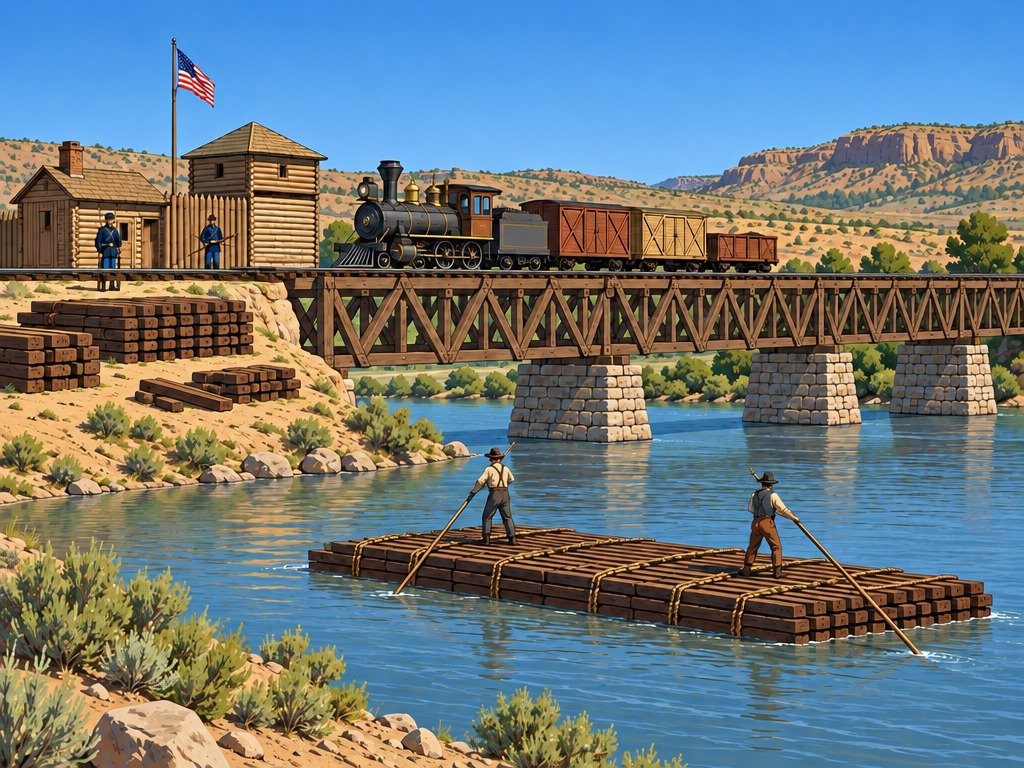
| Cheyenne to Fort Steele | 179 | A day | $10.75 | The North Platte bridge, guarded by the post. |
| Cheyenne to Rawlins | 193 | A day | $11.60 | Meal stop and hotel. |
| Cheyenne to Green River | 329 | A day | $19.75 | The junction for Fort Bridger by road (69 miles). |
| Cheyenne to Evanston | 441 | A day and a half | $26.45 | Meal stop (30 minutes), locomotive shops and the Uinta County seat. |
| Cheyenne to Denver (Denver Pacific) | 106 (some accounts say 110) | One day | $7 first class, quoted, 1877 | Opened 24 June 1870. Stations: Summit 10, Carr 21, Pierce 41, Greeley 55, Evans 59, Johnson 75, Hughes 89, Denver 106. |
| Denver to Kansas City (Kansas Pacific) | 637 | About a day and a half (36 hours, 1870) | — | 743 miles from Cheyenne to Kansas City by the Denver Pacific and the Kansas Pacific. Track joined at Comanche Crossing on 15 August 1870; service opened 1 September 1870. |
| Denver to Golden (Colorado Central) | about 15 | A morning | — | Standard gauge to Golden in 1870. |
| Golden to Black Hawk and Central City (Colorado Central) | — | A day | — | Narrow gauge to Black Hawk in 1872. The line did not reach Georgetown until August 1877, after the play range. |
Sleeping cars cost extra (Gear and Prices). Eating-house stops are 30 minutes; a character who misses the train waits for the next. Freight is priced under How Far, below.
Road, Stage and Trail Routes
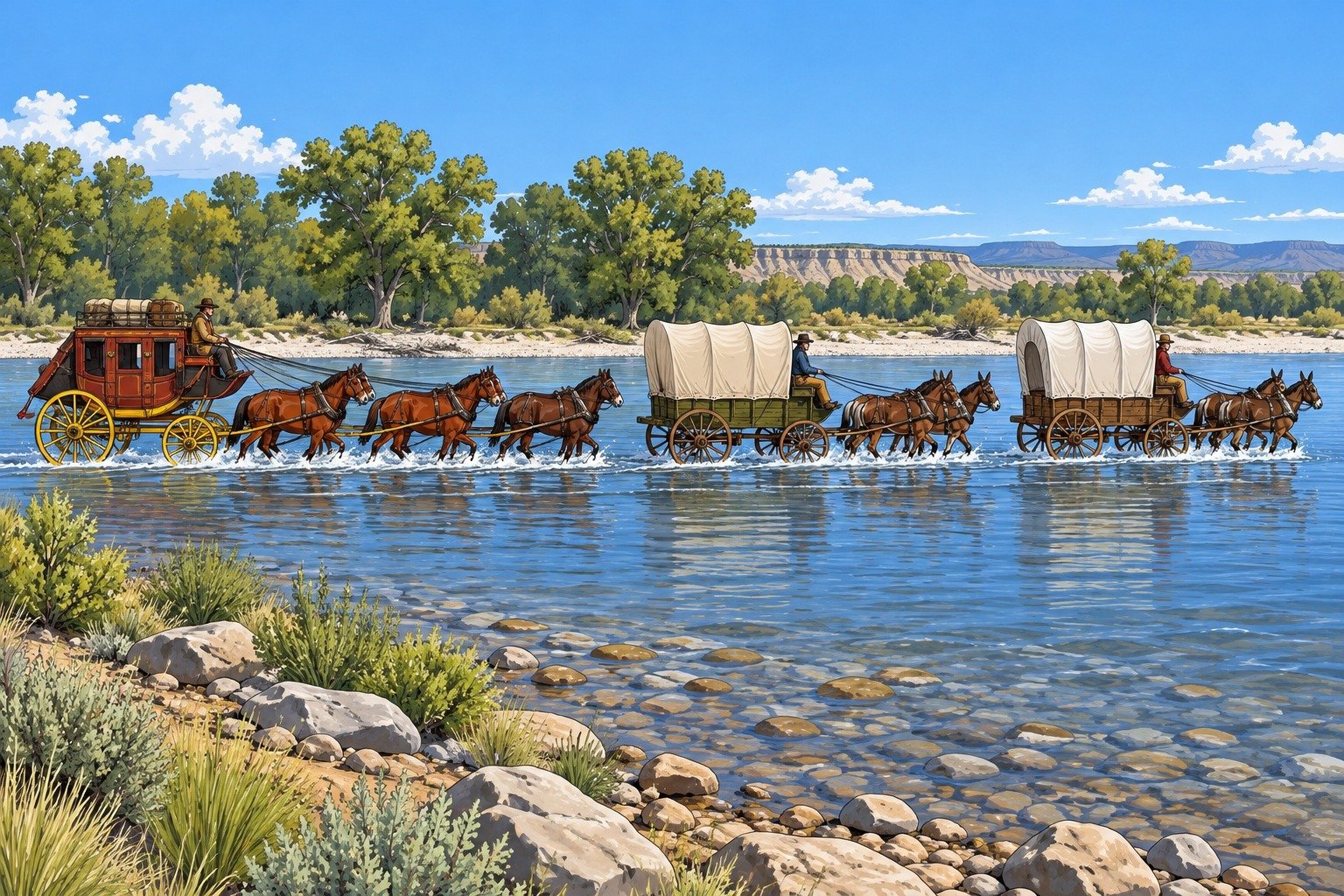
Distances are from Crofutt's 1872 guide unless noted. Days are given on foot / riding horse / wagon. Costs use Gear and Prices, Livery: a hired saddle horse or pony is $2 a day, a mule $1.50, a team and rig $5, a buggy and horse $3; a week of hire is six days.
Cheyenne to Fort Laramie. 89 miles; 6 / 3 / 5 days.
Stage and fare. Government mail ambulance only, 1872. Stage line from March 1876: a day to a day and a half; fare $4 third class to $7 first class, pro rated from the through ticket.
Hazards and stops. The road north of Cheyenne. Eating stations along it by April 1876. In 1876 the road carries gold seekers, freighters and troops; see the Fort Laramie entry.
Cheyenne to Fort Fetterman. 135 miles; 9 / 5 / 7 days.
Stage and fare. No stage.
Hazards and stops. By way of Fort Laramie (70 miles from there to Fetterman). The jump-off for the roads north.
Cheyenne to Custer City (Black Hills). 246 miles (some maps show 180); 17 / 9 / 13 days.
Stage and fare. $20 first class, $15 second, $10 third, through tickets, 1876. Three days in spring on the first-class run; second class planned for four days, third for six.
Hazards and stops. North of the Platte the road crosses the unceded country of the 1868 treaty (Article XVI); the Black Hills themselves lie inside the Great Sioux Reservation (Article II). Stage stops on the Cheyenne River and at Hat Creek were burned on the night of 26 June 1876; the company ran under Army camps at Hat Creek and Camp Collier from late June.
Cheyenne to Deadwood. About 311 by the Custer City road in 1876; a shorter road of 266 miles was cut in 1877, after the range; 21 / 11 / 16 days.
Stage and fare. The first stage reached Deadwood on 25 September 1876; the through fare was $50 from autumn 1876.
Hazards and stops. After the play range closes on 1 August 1876; Deadwood is an epilogue destination, not a campaign stop.
Bryan to South Pass City. 90 miles; 6 / 3 / 5 days.
Stage and fare. Four-horse coach, three times a week, $20, with the express and the mail, 1872.
Hazards and stops. The Sweetwater mines. Bryan is a Union Pacific meal station.
Green River to Fort Bridger. 69 miles; 5 / 3 / 4 days.
Stage and fare. No stage.
Hazards and stops. Also reached from Carter's Station, 10 miles from the fort.
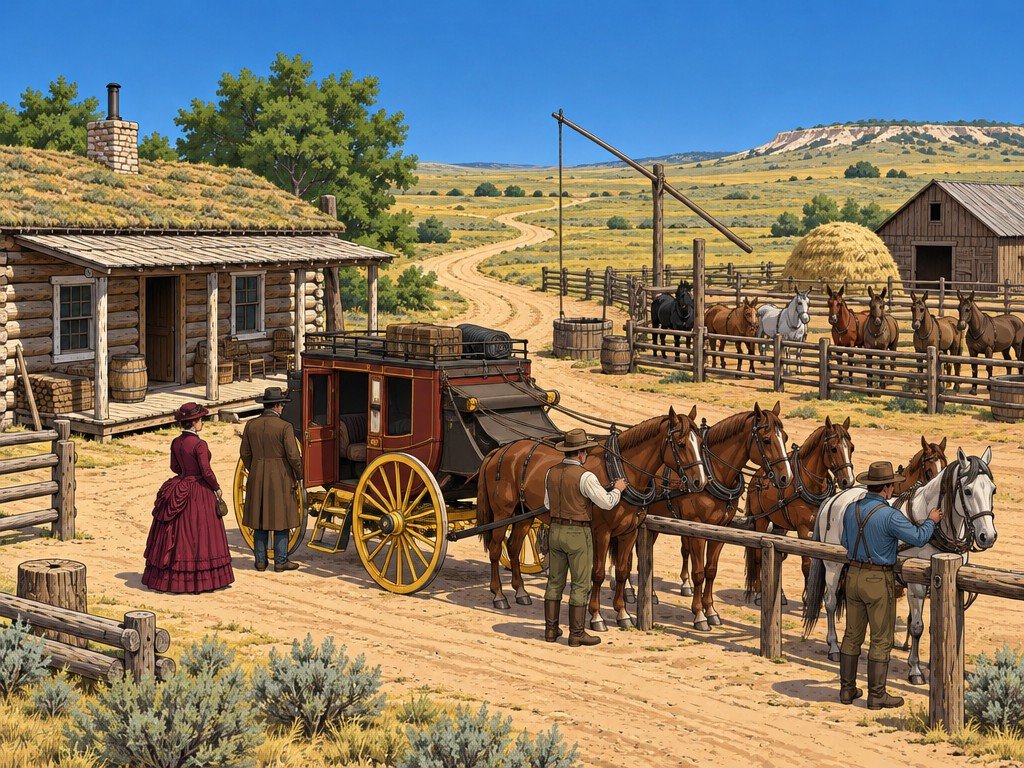
The Black Hills stage in 1876 used Concord coaches that carried nine inside and nine on the roof, with up to 1,500 pounds of cargo, behind six horses. Yates and Brown ran three trips to Custer City on 3, 7 and 10 February 1876 and sold the line on 12 February to Gilmer, Salisbury and Patrick; the new owners had regular service by 1 March, their first Concord coaches left Cheyenne on 3 April 1876, and through tickets were sold from April.
South of Cheyenne the stage roads run from Denver into the mountains and down the Front Range, and in 1876 a rival road to the Black Hills opens from the Union Pacific at Sidney. The days use the road rate of A Day's Travel; the Clear Creek roads are graded wagon roads, and a party that leaves them for the mountains uses the mountain third.
Denver to Golden, Black Hawk and Central City. About 37–40 miles; 3 / 2 / 2 days.
Stage and fare. Coaches by way of Golden and Clear Creek until the Colorado Central’s narrow gauge reached Black Hawk in mid-December 1872; after that, rail to Black Hawk and a short road (later rail) to Central City.
Hazards and stops. Freight to the mills shares the canyon road.
Denver to Georgetown. About 48 miles; 4 / 2 / 3 days.
Stage and fare. Colorado Stage Co. coaches up Clear Creek through Idaho Springs through the whole play range (about 8 hours); the rail did not reach Georgetown until 14 August 1877.
Hazards and stops. The same canyon; a silver camp at the end of it.
Denver to Colorado Springs and Pueblo. ~65–76 / ~108–118 miles; 5 / 3 / 4 days; 8 / 4 / 6 days.
Stage and fare. Coaches on the road south until the Denver and Rio Grande’s first passenger train reached Colorado Springs on 27 October 1871 and the line reached Pueblo in mid-June 1872; then rail.
Hazards and stops. The Front Range road: the road rate.
Sidney, Nebraska, to Custer City. About 267 miles; 18 / 9 / 14 days.
Stage and fare. Opened in 1876 as the rival to the Cheyenne road, by way of Henry T. Clarke’s toll bridge over the North Platte near present Bridgeport, opened 10 May 1876 (tolls of $2 to $6).
Hazards and stops. The same unceded country north of the Platte; the Army's camps on the Cheyenne road are not on this one.
How Far
Miles between the places a party uses most. R is rail, W is road (wagon, horse or stage); a sum is by way of Cheyenne. Days come from TERMS: A Day's Travel. Fort Laramie to Laramie and to the Colorado towns run by Cheyenne because no road the book prices crosses the Laramie plains from the fort.
| From, to | Denver | Fort Laramie | Laramie | Greeley | Golden |
|---|---|---|---|---|---|
| Cheyenne | 106 R | 89 W | 57 R | 55 R | 121 R |
| Denver | 195 R then W | 163 R | 51 R | 15 R | |
| Fort Laramie | 146 W then R | 144 W then R | 210 W then R | ||
| Laramie | 112 R | 178 R | |||
| Greeley | 66 R |
Freight. The Army let its wagon transportation by contract at a rate per 100 pounds per 100 miles; the 1866 contracts for the Kansas, Colorado and New Mexico posts ran at $1.38, and the contracts of 1867 to 1870 ran from $1 to $4 by route, season and distance. Use $1.25 per 100 pounds per 100 miles as the table value for a Camp Carlin contract in the early 1870s, so a 100-pound sack from Cheyenne to Fort Laramie costs about $1.10 to haul. Wagon freight to the Black Hills in 1876 was 4 cents a pound in summer and 6 in winter, and rail freight is about $3.50 per 100 pounds first class from Omaha to Cheyenne and $0.75 from Cheyenne to Denver (Gear and Prices, which owns both).
The Old Trails
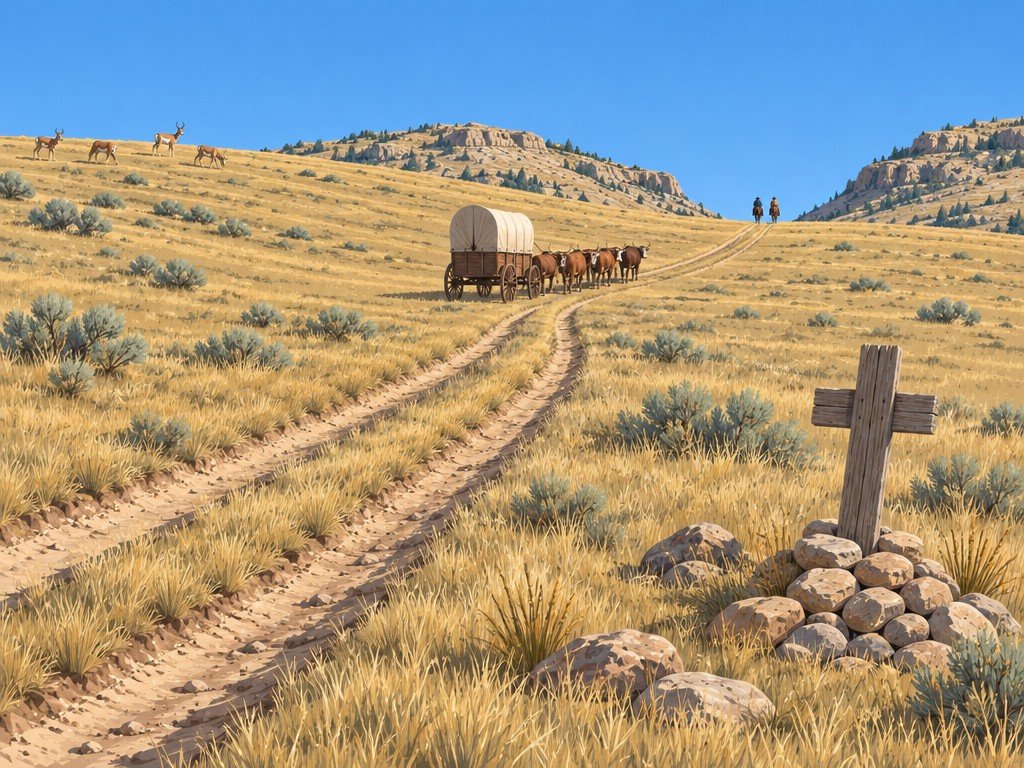
Oregon and California roads. The emigrant road up the North Platte from Fort Laramie and over South Pass. The transcontinental rail, finished in May 1869, ended its place as the main road west; local and freight traffic continued . The old Platte Bridge post, Fort Casper, was abandoned in 1867.
Overland Trail. The southern route of the Overland stage, from Julesburg up the South Platte and the Cache la Poudre, through Virginia Dale, to Fort Halleck and the Laramie plains. Stage service ended in 1869 with the rail. Station ruins and ranches mark it.
Bozeman Trail. Opened in 1863 to the Montana gold fields. Fort Phil Kearny, Fort C.F. Smith and Fort Reno were abandoned in the summer of 1868 under the Fort Laramie Treaty, which closed the road. Fort Phil Kearny was 290 miles north of Cheyenne. A party using it in play is trespassing on land the 1868 treaty set aside for the Lakota and Northern Cheyenne.
Goodnight-Loving Trail. Established in 1866: first herds from Texas to Horsehead Crossing and Fort Sumner, then north along the Santa Fe Trail toward Denver; the route was moved east in the fall of 1867. In spring 1868 a herd was delivered to Cheyenne under a contract, extending the trail to Wyoming (Handbook of Texas). Trail credit and the early history are disputed. Cattle are driven to Colorado and Wyoming markets by it through the play range.
The Texas Trail. The drives north from Texas across Indian Territory and Kansas to Ogallala, Nebraska, then west to Pine Bluffs, with a branch north from Ogallala past Fort Laramie toward Montana (the Old Texas Trail marker at Pine Bluffs and the Weston County markers date the trail 1866 to 1897). Texas herds reached Laramie County from 1869 (the Cheyenne chapter). The marked Texas Trail through Pine Bluffs carried most of its traffic in the years after 1876; in the play range use the Goodnight-Loving route and the South Platte roads.
How News and Mail Travel
| Channel | Where it works | Time | Cost |
|---|---|---|---|
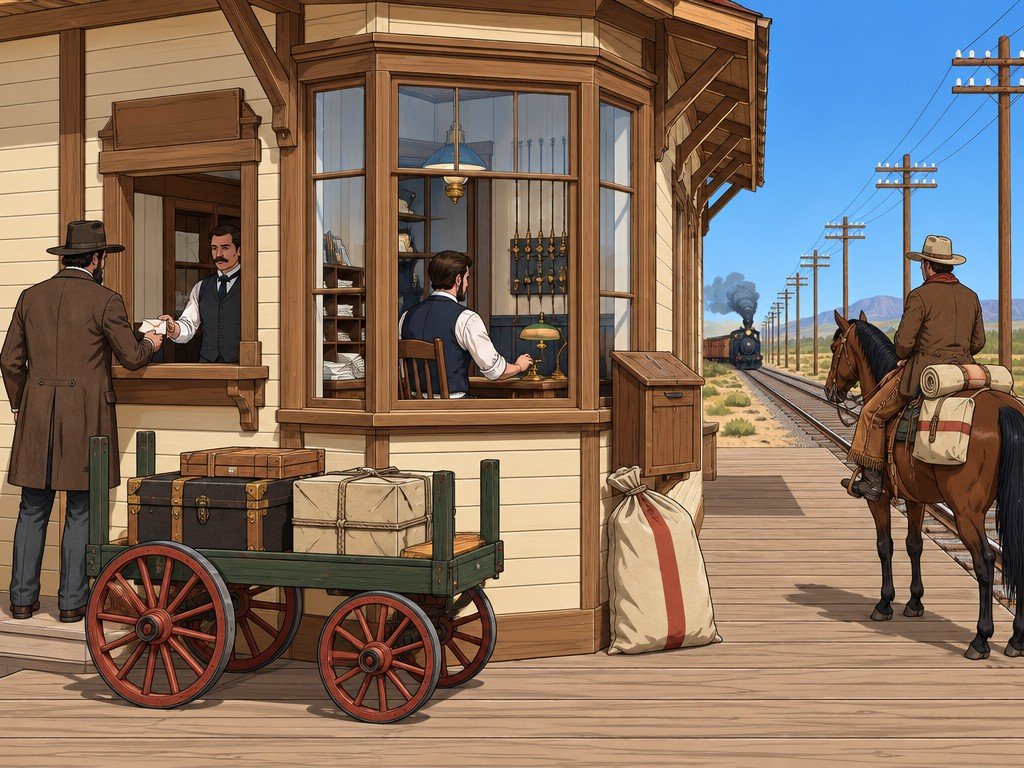
| Telegraph | Along the Union Pacific, the Denver Pacific and to Denver and beyond; an office at each depot. Reached Denver in 1863; the transcontinental line opened in 1861. The Denver to Cheyenne wire was finished by 31 December 1868. | Minutes once the operator sends. A message waits for an open office, an operator and a runner to the recipient . | Western Union charged 4 to 25 cents a word by distance in 1874: ten words $0.40 to $2.50; Cheyenne to Denver about $0.50. Ten words from Cheyenne to Chicago $1, to Custer City $2, to Deadwood $2.50 (Hand-Book of Wyoming, 1877). |
| Mail by rail | Every station on the Union Pacific, the Denver Pacific and the Kansas Pacific. The Post Office ran mail-sorting railway routes from 1864 and used a catcher to pick up mail from a moving train from 1869 (Smithsonian), but no source ties these to a particular local train. | Moves with the train: Cheyenne to Denver is a day. | Letter $0.03 per half ounce; postal card $0.01 from 12 May 1873 (Gear and Prices). |
| Mail by stage and rider | Where there is no rail: Fort Laramie, the agencies, the mines, the Black Hills. | A stage day is about 60 miles (about 80 on the Black Hills line's best runs). An unofficial rider is a mounted day (30 miles). | A letter to Deadwood by the stage line: $0.10 an envelope, November 1876 (the Cheyenne chapter). |
| Newspaper | Carried by the same trains and stages. The Cheyenne Daily Leader and the Rocky Mountain News have wire news, and country papers copy it. | A news item crosses the corridor in a day. | A paper, 15 cents at its first issue (the Cheyenne chapter); a daily 10 cents in the 1870s. |
| A rider with a letter | Any distance. Army posts, the quartermaster and the agencies send couriers. | Mounted pace, plus a quarter with a second horse. With relay stations, double the day's distance (The Stable, and Era Rules, Travel at the Table). | Free to the Army, a day's hire to a civilian. |
At the table. A warning can outrun the party by wire, but reaching the right person before the office closes, and being believed when the message arrives, is the problem. A message moves at the speed of its carrier, and a document moves only as fast as the train or rider that holds it. A telegram is read by its operator (see the telegrapher template). When a message is sent in play, say the hour it was sent and the hour the office closed.
Part Two: Places Outside the Two Cities
Each entry gives what the place is, the dates for 1869 to 1876, who is there, and a hook. Distances from Cheyenne are in miles by the road or the rail, from Crofutt's 1872 guide except where noted.
Army Posts
| Place | Dates and position | What is there | Hook |
|---|---|---|---|
| Fort D.A. Russell and Camp Carlin | Fort begun July or August 1867; about 3 miles from Cheyenne on Crow Creek; Camp Carlin, the quartermaster's depot that supplies the posts and agencies, lies between fort and town (Factions and Powers). | The garrison, a post trader, the quartermaster's wagon trains, a railroad siding. | A shipment is short at the depot and nobody signed for the difference. |
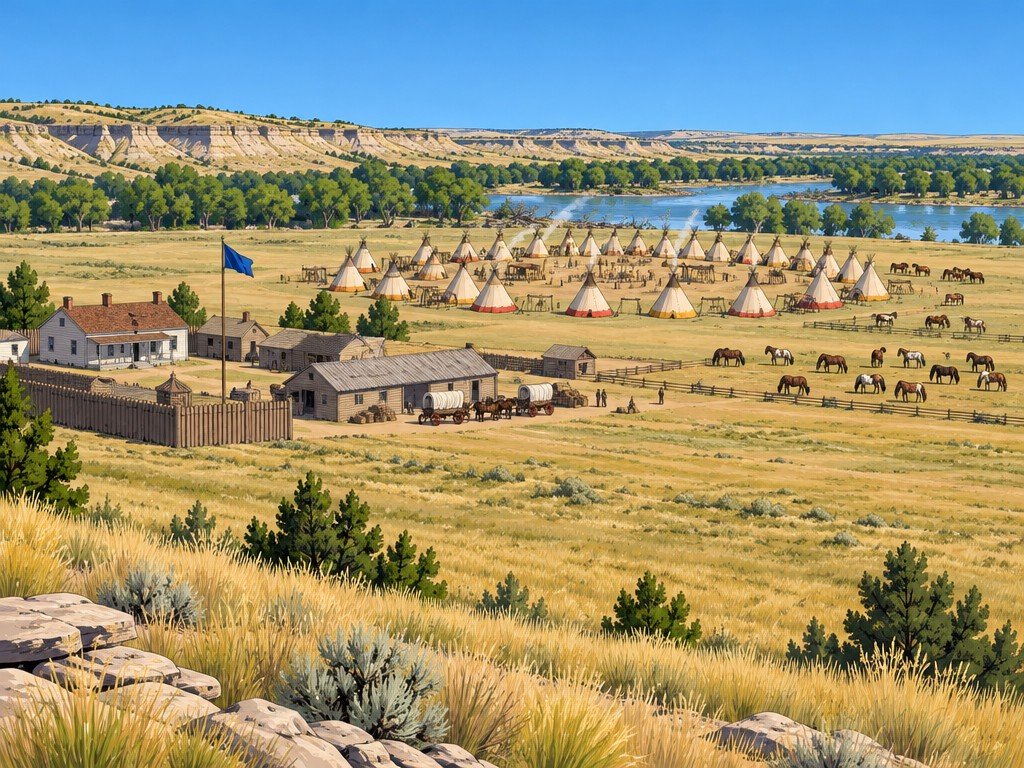
| Fort Laramie | 89 miles north of Cheyenne on the Laramie River near the North Platte; Army post, treaty ground; cavalry barracks built 1872 to 1874; Congress funded an iron bridge over the North Platte in January 1874, the ironwork arrived by bull train in February 1875 and the bridge was finished for the 1876 campaigns, so in 1874 the river is crossed by ferry or ford; the stage line from March 1876. | Officers, scouts, interpreters, civilian packers and teamsters; a staging point for 1876. Gold seekers stop here; the Army expels some of them. | A party with a letter from a department officer is held at the gate by an officer who has orders he cannot show. |
| Fort Fetterman | Founded 19 July 1867 above the North Platte near present Douglas; 135 miles from Cheyenne, 70 northwest of Fort Laramie. Closed in 1882. | A small garrison, a post trader, a settlement beside it; the base for the roads north. | A scout wants a civilian guide who knows the Powder River country the treaty closed. |
| Fort Steele | Founded 30 June 1868; closed in 1886. At the Union Pacific bridge over the North Platte, 695 miles from Omaha. | A guard post at the bridge. Lumber and railroad ties are floated down the river and shipped from here. | A tie drive is stuck at the bridge, and the contractor owes his crew. |
| Fort Sanders | Built in July 1866 as Fort John Buford and renamed Fort Sanders in September 1866; about 3 miles south of Laramie on the Laramie plains, on the Overland road and from 1868 beside the Union Pacific line; abandoned in May 1882. | A small garrison guarding the line and the Laramie shops; a post trader; the quartermaster's condemned-stock sales. | A condemned Army horse sold at the post carries a brand that is not the Army's, and the livery in Laramie bought it. |
| Fort Bridger | Army post from 1858; 69 miles from Green River, 10 from Carter's Station. A treaty with the Eastern Shoshone was signed here on 3 July 1868. | Old trading post, a hotel and a warehouse; freight for the Montana mines is left at Carter's Station. | A freight shipment for Montana is billed to a firm that closed. |
| Camp Brown | Camp Augur from 28 June 1869; Camp Brown from 28 March 1870; moved on 26 June 1871 (one source says 26 July) to the forks of the Little Wind River; renamed Fort Washakie on 30 December 1878, after the play range. The Wind River Reservation of the Eastern Shoshone, set by the 1868 treaty. | The post, an agency, and Eastern Shoshone scouts who work for the Army. | The agent wants a message carried to Fort Bridger that the post commander does not want sent. |
| Camp Robinson and Camp Sheridan | Camp Robinson was a tent camp at the Red Cloud Agency from March 1874, renamed on 29 March 1874; Camp Sheridan was established at the Spotted Tail Agency on 12 March 1874 and got permanent buildings in 1875. Both are in northwest Nebraska, outside the corridor. | At Camp Sheridan, troops of the 8th Infantry and the 3rd Cavalry (Factions and Powers); at both, an agent's staff and civilian contractors. | A civilian contractor's beef count is disputed. |
The Agencies and Reservations
The agencies are federal institutions on which the Lakota, Northern Cheyenne and other nations draw rations, and also the places where they hold councils and decide what to do. The Bureau of Indian Affairs' agents are not the nations' leaders (see Factions and Powers).
| Place | Dates and position | What is there | Hook |
|---|---|---|---|
| Red Cloud Agency | Moved in August 1873 to the White River in northwest Nebraska, away from Fort Laramie; an acting agent was killed in February 1874, and Camp Robinson followed. | Oglala Lakota camps, the agent's staff, the quartermaster's beef, traders. | A ration issue falls short and the Oglala headmen decide whether to ask the agent or the Army. |
| Spotted Tail Agency | The agency of the Sicangu (Brule) Lakota: Whetstone Agency on the Missouri until June 1871, then on White Clay Creek, then from 1874 on Beaver Creek in northwest Nebraska, where Camp Sheridan guards it; called Spotted Tail Agency from 1874. | Sicangu camps, the agent's staff, traders. | A trader carries goods the agent does not want sold, and a headman wants to know why. |
| Wind River Reservation | Eastern Shoshone reservation under the Fort Bridger treaty of 3 July 1868, less than a tenth of the land promised in 1863 (Fremont County Museum). Camp Brown stands on it. | The Eastern Shoshone, an agency, a school, the post. | A prospecting party crosses the line, and the Eastern Shoshone and the Army must decide what to do. |
| Los Pinos Agency | The agency of the Tabeguache (Uncompahgre) Ute under the 1868 treaty, set in 1869 on a branch of Cochetopa Creek east of the reservation, where the band halted and refused to go farther west; the Brunot Agreement was signed here on 13 September 1873 (Tribal Nations); moved in 1875 to the Uncompahgre valley after the cession. | The agent's staff, a trader, the annuity goods, the Tabeguache camps in season. | The annual trust payment arrives short and the agent asks the party to say it did not (Tribal Nations, Ute hooks). |
| White River Agency | The agency of the northern Ute bands (Yampa and Grand River) on the White River in northwest Colorado, near present Meeker, from 1869, far from any road the book prices; the 1879 incident there is after the play range. | The agent's staff, a sawmill, the bands' camps and horse herds. | A headman asks a party to carry a petition to Denver past an agent who would rather it not arrive. |
Union Pacific Towns
| Place | Dates and position | What is there | Hook |
|---|---|---|---|
| Julesburg | 139 miles east of Cheyenne on the main line in Colorado Territory (Omaha mile 377). The railroad reached it about 24 June 1867, with a population of 4,000 that summer; by 1872 the town was nearly deserted except as a point for military freight for Fort Sedgwick, which the Army abandoned in May 1871. | A station, a few buildings, the freight dock. | A freighter needs a witness to a shipment that arrived at an empty town. |
| Laramie | About 57 miles west of Cheyenne. The rails arrived on 4 May 1868; county seat of Albany County; a hotel, shops and a 30-minute meal stop. In March 1870 women sat on a jury here for the first time; Louisa Swain voted on 6 September 1870. The territorial prison opened here in January 1873 (cornerstone 15 July 1872). | Courthouse, prison, railroad shops, a daily newspaper (the Sentinel), seven churches. | A juror is threatened. A trial is in session and the party holds evidence. |
| Rawlins | 193 miles west. Founded in 1868 as Rawlins Springs, a meal station with a hotel and about 400 residents in 1872; a stone roundhouse of ten stalls. | Railroad hotel, a freight depot, ranches. | A stock car arrives with the wrong brands in it, shipped under the name of Carrick's horse dealer, a Tejano who trades on his own account (Adversaries, Outlaw Leader). |
| South Pass City and Atlantic City | The Sweetwater mines, 90 miles north of Bryan by stage (the road table). South Pass City was laid out in 1867 after the Carissa strike and was Sweetwater County's first seat; Esther Morris sat as justice of the peace here from 14 February 1870. Reports of its population vary widely, from under a thousand to several thousand at the 1869 peak, and the camps were thinning by 1873, when the county seat went to Green River. Atlantic City, 4 miles east, dates from 1868; Camp Stambaugh, a two-company post, stood north of it from June 1870 to 1878. | Quartz mills, a few stores, a justice's office, the stage and express. | A mill owner wants a claim's paper carried to the recorder before a partner can reach Green River. |
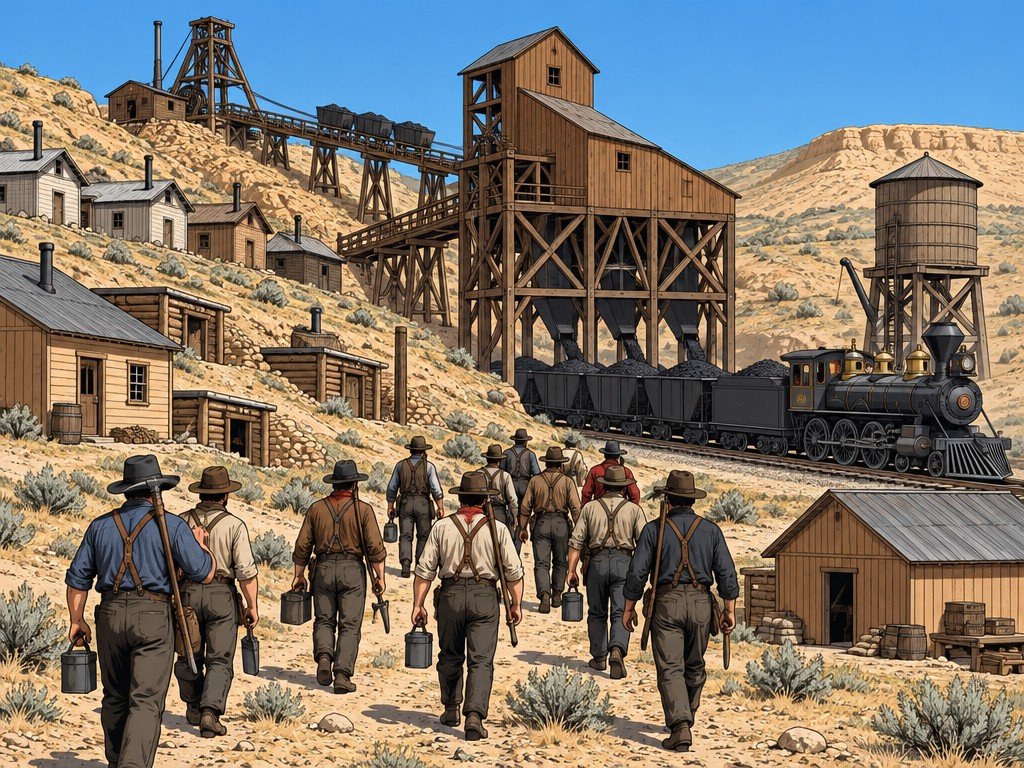
| Rock Springs | Between Rawlins and Green River. Coal first mined 1868; the Union Pacific took over the mines in 1874; after the miners struck in November 1875 against a pay cut, the company hired Chinese miners from Evanston and reopened with about 150 Chinese and 50 white miners; the governor asked for federal troops and two cavalry companies were posted at Rock Springs. | Mines, the company store, boarding houses, a Chinese camp. The 1885 violence is after the play range. | The strike is on. The Welsh pit boss who hires for the company needs men for the pit before the troops arrive, and a clerk needs a signature. |
| Evanston | 441 miles west. The tracks reached it in the fall of 1868 and a tent saloon opened in November 1868. County seat of Uinta County in the first election, 6 September 1870; locomotive shops from 1871; 30-minute meal stop; about 500 residents in 1872. The Chinese temple here dates from 1874. | Roundhouse, hotel, shops, Chinese section crews and coal miners at nearby Almy. | A ballot box and a count of a first county election. |
| Union Pacific coal towns | Carbon, founded 1868 along the line (Omaha mile 656, 140 miles west of Cheyenne); the Wyoming Coal and Mining Company worked its mines until the Union Pacific took them over in 1874; Almy near Evanston. Miners were mostly from the British Isles; the railroad hired Chinese miners at Almy and Rock Springs, and Finnish and other Scandinavian miners later at Carbon. | Pits, company stores, boarding houses, a cemetery. | A blast in the pit and a company inquiry that will not call it what it was. |
Colorado Towns
| Place | Dates and position | What is there | Hook |
|---|---|---|---|
| Greeley | 55 miles south of Cheyenne on the Denver Pacific. A temperance colony laid out in May 1870 (accounts say March or April); about 1,500 residents in 1872, a weekly paper, no intoxicating drink. | Irrigation ditches, farms, churches, schools. | A saloon keeper wants to open a house just outside the colony line. |
| Golden | About 15 miles west of Denver; territorial capital 1862 to 1867; headquarters of the Colorado Central, which was joined by standard gauge to Denver on 24 September 1870. | Railroad offices, the gateway for the narrow gauge to the mines. | A shipment of mine machinery has gone to the wrong siding. |
| Boulder | North of Golden at the foothills. Incorporated 4 November 1871; rail arrived in 1873; the university building was finished in 1876 and classes began in September 1877, so in the play range it is a building, not a college. Coal from Marshall. | Mills, coal, a new college building. | A coal contract is signed twice. |
| Colorado Springs | Founded on 31 July 1871 by William Jackson Palmer's Colorado Springs Company on the Denver and Rio Grande; 75 miles south of Denver (Denver chapter); a resort town for people with money, and dry. | Hotels, new houses, an English investor. | A land agent offers a lot with a second owner. |
| Pueblo | South of Colorado Springs. The Denver and Rio Grande reached it in 1872; the Atchison, Topeka and Santa Fe in 1876. Incorporated as a town in 1870 and a city in 1873, when a census showed more than 3,000 people; South Pueblo, across the Arkansas, was laid out by the railroad's interests and incorporated in 1873. Fort Reynolds nearby, 1867 to 1872. | A stockyard, a smelter district, rail yards. | A Santa Fe agent and a Rio Grande agent want the same witness. |
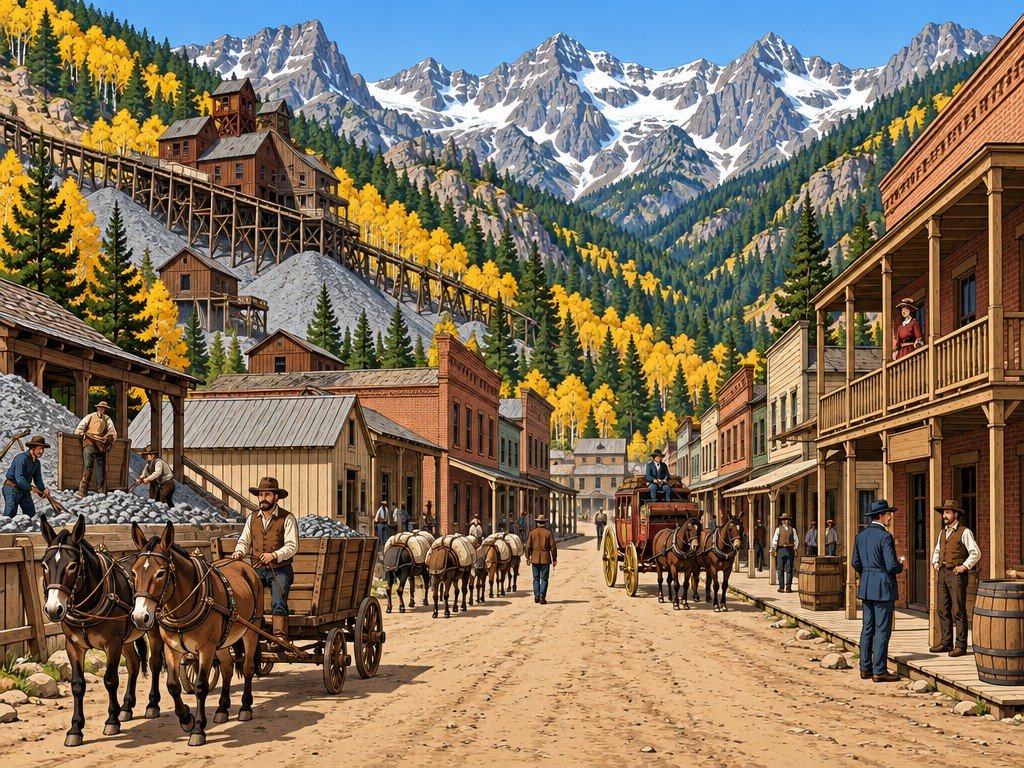
| Central City and Black Hawk | Gold and silver-lead mines up Clear Creek. The Colorado Central narrow gauge reached Black Hawk in 1872. | The Boston and Colorado smelter at Black Hawk, boarding houses, Cornish miners and the Welsh smelter men of the Swansea process (The Era). | An assay report disagrees with the claim. |
| Georgetown | A silver camp, incorporated 28 January 1868. The railroad did not reach it until August 1877. In the play range it is reached by wagon or stage. | Mills, hotels, a newspaper. | A mining syndicate wants a signature before the rail arrives. |
Part Three: Campaign Tools
The Campaign Frame
The frame is six sessions that follow the corridor's real calendar, from autumn 1869 to summer 1876. Run them in order for a campaign or take one alone. Each has a premise, a pressure from a power in Factions and Powers, and an end state that changes the next. The dates are real; the premises are fictional. Between sessions the years pass; let each player say what the character did, or run the frame as six different parties in one corridor. The Starter Adventure fits before session 4 or 5. The Campaign Modes in Running the Era are open-ended spines; a mode can run inside this frame or on its own.
| # | When and where | Premise | Pressure | End state |
|---|---|---|---|---|
| 1 | Fall 1869, Cheyenne to Fort Russell | A Herd for the Fort. A Texas herd is driven in to supply the garrison's beef, and an early snow scatters it. The party gathers the cattle before the contractor loses the contract. (Texas cattle were driven to Fort Russell in the fall of 1869 and recovered in the spring, according to a 1897 society account.) | Cattle Interests; the Army | The herd is delivered, short, or lost. |
| 2 | 24 June 1870, Cheyenne and Denver | The First Train. The Denver Pacific opens. A package, a prisoner or a witness must be on the first train. The crowd, the officials and the competing stage line are all against the party. | Railroads; City Governments | The party arrives, and someone on board has not forgotten the road. |
| 3 | 6 September 1870, Laramie and Evanston | The Count. The first Wyoming election with women voting, and the first county election in Uinta County. A ballot box, a count and a contested seat. | Wyoming Territory Government; Law Enforcement | The count stands or is thrown out. |
| 4 | August 1873 to March 1874, Red Cloud Agency | Ration Day. The agency has moved to the White River. The Northern Cheyenne interpreter is hired to carry a message, and the Oglala Lakota council is watching what the agent does with the beef. | Bureau of Indian Affairs; the Oglala Lakota; the Army | The agency holds, or the Army builds Camp Robinson. |
| 5 | November 1875, Rock Springs | The Strike. The Union Pacific brings in Chinese miners to replace strikers (the 1885 violence is after the play range). The party is hired by one side and meets the other. | Mining Interests; Railroads | The mines reopen. |
| 6 | February to August 1876, Cheyenne and the road north | The Road to the Hills. A freight outfit or a stage line needs guards for the Black Hills road. Carrick works the same road. The campaign ends on 1 August 1876, when Colorado becomes a state, and news of the summer's fighting reaches Cheyenne by wire. | Outlaws and Vigilance; the Army; the Oglala Lakota, the Northern Cheyenne | The road is open, or closed. |
Dates to Use
These dates fall inside the play range. Each is a fixed point the world arrives at whatever the players do. Use them as deadlines, as rumor or as news, in the frame above or in any Campaign Mode. Each is from the timeline in The Era.
| Date | Event | Use at the table |
|---|---|---|
| 10 December 1869 | Wyoming Territory gives women the vote | A political session; a precinct |
| 24 June 1870 | The first Denver Pacific train runs between Denver and Cheyenne (track finished 22 June) | A first train; a rate fight |
| 6 September 1870 | The first election in which women vote | A close precinct |
| 13 September 1873 | The Brunot Agreement is signed with the Ute | A delegation; a disputed line |
| 29 November 1873 | The Laramie County stock association (which dates itself to 1872) meets in Cheyenne | A detective; a brand fight |
| 2 July 1874 | The Black Hills expedition leaves Fort Abraham Lincoln | The pressure begins |
| 23 October 1874 | The flagpole at Red Cloud Agency is cut down | An agent's inquiry (Factions and Powers) |
| 20 September 1875 | The Allison commission council convenes near Red Cloud Agency | A delegation; a rejected offer |
| 31 January 1876 | The deadline for bands outside the agencies to report | A hard choice for the Lakota and Cheyenne |
| 3 February 1876 | The first Cheyenne to Custer City stage trip | A seat on the stage |
| 17 March 1876 | The Army attacks a village on the Powder River | The war is on |
| 25 to 26 June 1876 | Battle of the Little Bighorn | News arrives in July |
| 1 August 1876 | Colorado becomes a state | The range ends |
Rumors
Roll a d20 or choose. Each rumor is true, false or partly true; the GM decides what the party can learn. Dates are the real ones.
| d20 | Rumor | Truth |
|---|---|---|
| 1 | The Denver Pacific is opening in June. | True, 24 June 1870. |
| 2 | The Kansas Pacific has bought the Denver Pacific. | True, spring 1872. |
| 3 | There is gold in the Black Hills and the Army cannot turn every party back. | True from August 1874; the Army expels parties until 1876. |
| 4 | The Union Pacific hired Chinese men to take the miners' jobs at Rock Springs. | True, November 1875. |
| 5 | Women have been sworn on a Laramie jury. | True, March 1870. |
| 6 | The rail will reach Georgetown next spring. | False in the play range; August 1877. |
| 7 | The Red Cloud Agency is moving away from the Platte. | True, August 1873. |
| 8 | Stage stations on the Black Hills road have been burned. | True, 26 June 1876. |
| 9 | There are no saloons in Greeley. | True. |
| 10 | The Army will go against the Lakota and the Northern Cheyenne in the spring. | True, March 1876. |
| 11 | A Texas herd on the road is carrying stolen stock. | The GM decides. Carrick works the Texas drives. |
| 12 | Colorado is to be a state by the summer. | True, 1 August 1876. |
| 13 | A land office clerk has filed a claim twice with different owners. | The GM decides. |
| 14 | A woman voter has been offered money to stay home, and she is telling people. | The GM decides. Wyoming women vote from 6 September 1870. |
| 15 | The stock association has hired a detective, and nobody knows whom he is watching. | The GM decides. The Laramie County association meets in Cheyenne from 29 November 1873. |
| 16 | Two men sign as governor, and a clerk holds the paper. | True, spring 1874, in Colorado. |
| 17 | A freight car is marked delivered and has not arrived. | The GM decides. |
| 18 | A Ute delegation is passing through, and a syndicate wants its signatures. | The GM decides. The Brunot Agreement is signed 13 September 1873. |
| 19 | A fire destroyed a laundry on Wazee Street, and a neighbor saw who started it. | The GM decides. |
| 20 | A bank says a note was paid; the ledger says it was not. | The GM decides. |
Encounters on the Road
Roll a d12 on any road leg where the story allows an encounter. An encounter is a scene, not a roll for every day.
| d12 | Encounter | What it asks |
|---|---|---|
| 1 | A freight train of 10 to 30 wagons camped at a station. | Information, a trade, or a driver short of a hand. |
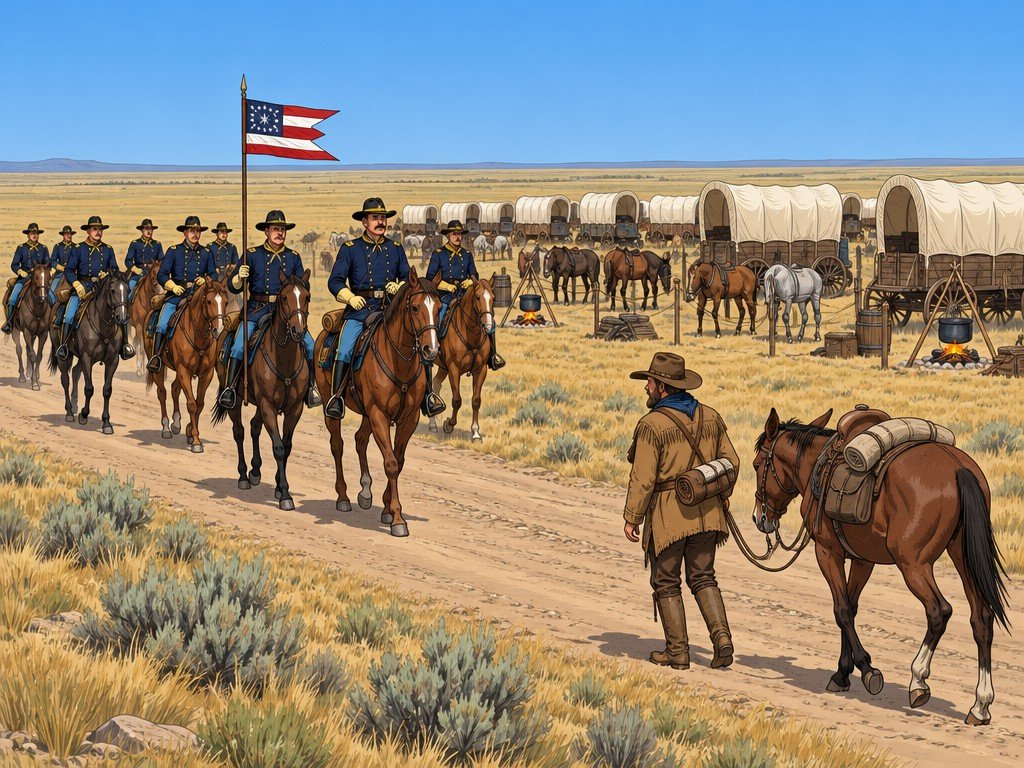
| 2 | A cavalry patrol or an escort. | Papers, a delay, an offer of an escort for a price. |
| 3 | A stage at the station changing teams. | News and mail; a seat sold twice. |
| 4 | A Texas drive on the trail with a herd. | Hands for hire; strays that carry another brand. |
| 5 | A surveying party with a transit and chain. | A land agent's stakes; a question about whose land. |
| 6 | Oglala Lakota or Northern Cheyenne riders, a hunting party or a party going to an agency. | They are going somewhere; the party's business is not theirs. The GM decides what each wants. |
| 7 | A lone rider on a lame horse. | A favor, a warning, or a decoy. |
| 8 | Gold seekers on the Black Hills road, 1875 to 1876. | A rumor; a request for a guide; an Army expulsion. |
| 9 | A river or creek in flood. | An Average Operate or Riding check, Hard in flood (Era Rules, Travel at the Table), with 1 Bane Die for a loaded wagon. Failure state: a lost day, a wagon on its side. |
| 10 | A railroad crew or a tie drive. | Work, a rumor of pay, a fight over wages. |
| 11 | Thieves working stock. | Carrick or his men, or imitators. A chase. |
| 12 | A blizzard or a storm. | A station, a ranch or a camp to shelter in; a Hard Survival check if there is none, with a lost day or a lamed animal as the failure. |
Complications at a Depot
Roll a d12 whenever the party is at a station and the story needs trouble.
| d12 | Complication |
|---|---|
| 1 | The train is late and the crowd on the platform is restless. |
| 2 | A shipment is billed to the wrong name, and the clerk will not release it without a signature. |
| 3 | The telegraph office is closed and the operator is not at the key. |
| 4 | A town officer enforces the ordinance on carrying arms (Gear and Prices, Carrying in Town) on a stranger. |
| 5 | The meal stop is 30 minutes and the room is full; a passenger is left behind. |
| 6 | A trunk is exchanged at the baggage car. |
| 7 | A sheriff's warrant or a marshal's writ is served on a passenger, and a lawyer is on the same train. |
| 8 | A herd is being loaded at the stock pens and a brand is questioned. |
| 9 | A rival claims the same thing, with better papers. |
| 10 | The audience has a marker the player did not know: a faith, a regiment, a debt (Era Rules, Prejudice). |
| 11 | Someone in the room is ill, and others are exposed (Era Rules, Illness). |
| 12 | Roll twice and combine. |
Two Journey Outlines
These replace a daily ledger. Each leg is a scene with a named failure state.
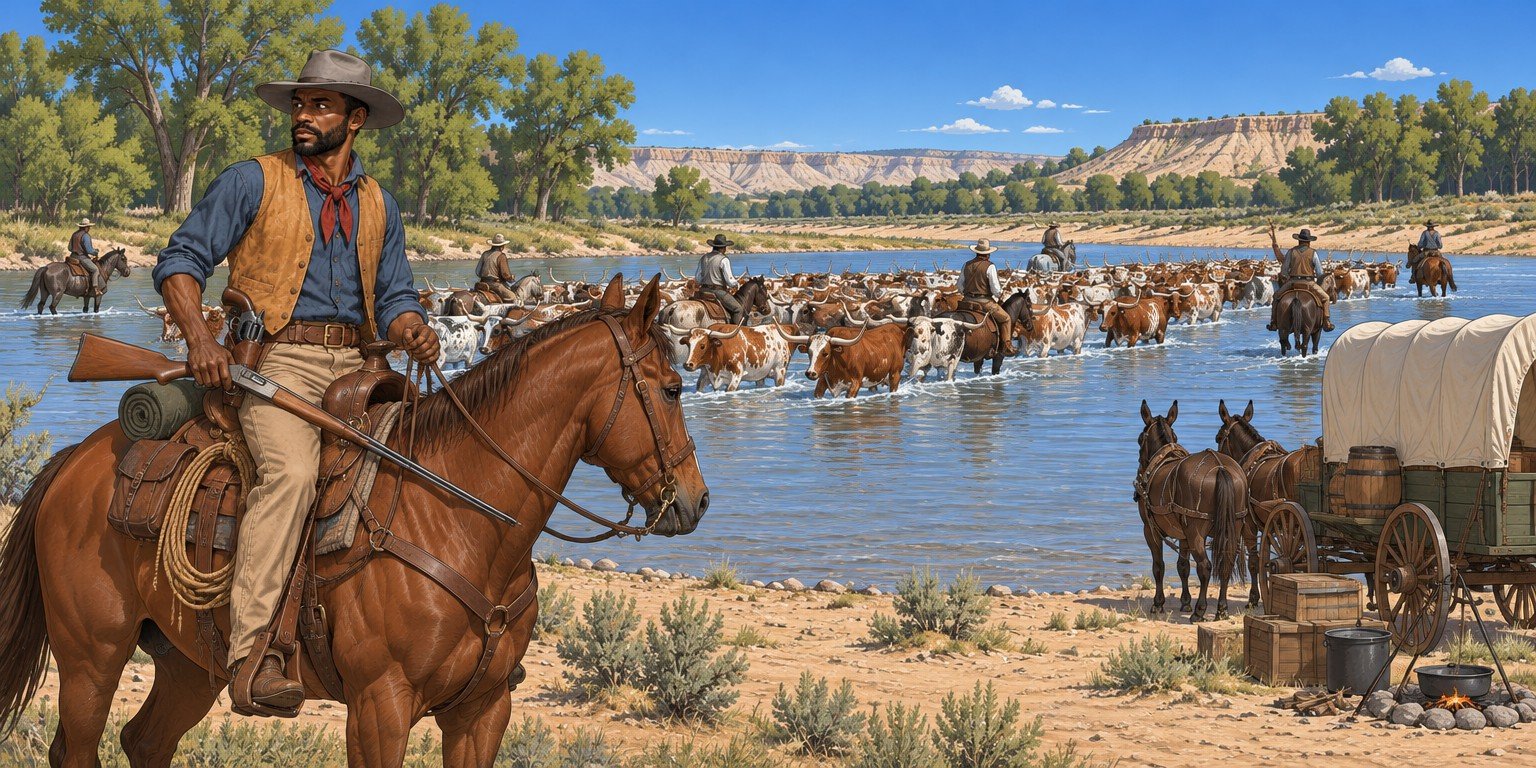
Journey: A Herd to Cheyenne
A drive of Texas cattle from the Texas Trail to the Cheyenne depot.
- The Muster. A trail boss hires hands (Negotiation or Charm to bargain a wage; see Gear and Prices). A hand has a grudge. Failure state: a poor crew.
- The River. A Platte crossing with a herd. Average Riding, Hard in flood (Era Rules). Failure state: cattle lost, a hand injured.
- The Station. A stop with a ranch, a store and a sheriff's deputy asking about brands. Failure state: a brand is questioned and the herd is held.
- The Raid. Carrick's men try to cut out stock at night. Perception to spot it; Ranged or Riding to stop it. Failure state: stolen head, a hurt hand, a debt to a buyer.
- The Storm. The herd runs in a blizzard. Hard Survival or Riding; a Calamity scatters the herd. Failure state: a delay of days (the 1869 Fort Russell herd).
- The Depot. The herd reaches the Cheyenne stock pens. A buyer pays cash and asks no questions. Failure state: a buyer who will not pay until the count is made.
Journey: A Freight Train to Fort Laramie
A Camp Carlin train of 10 to 30 wagons bound for Fort Laramie: 89 miles, five days by wagon.
- The Load. A manifest and a quartermaster's clerk. Craft or Perception to catch an error. Failure state: a short load and a dispute.
- The First Camp. A night at a station. A teamster is ill; Medicine, with the illness rule from Era Rules. Failure state: a driver out for the trip.
- The Wagon. A broken axle or a lame team. Craft or Operate, Average. Failure state: a day lost.
- The Stranger. A civilian asks to join the train. He may be a prospector bound for the Black Hills or a decoy for thieves. Perception or Streetwise.
- The Fort. The load is counted at the gate. A shortage is the party's problem unless they found it first.
Ordinary-Person Templates
These are role templates, not people.
| Role | Where found | Knows | Offers | Wants | Complication |
|---|---|---|---|---|---|
| Livery keeper | Any town or railroad station | Every horse by brand, who rode in and when | Mounts and mules at the livery rate; stabling; a place to leave a team (Gear and Prices) | Cash, and no horse left unpaid | Has bought a horse from a man in a hurry. |
| Doctor | A town, a post or a mining camp | Who is ill, who is hurt, and what they paid | A Medicine check, and a bed and a nurse at the rates in Gear and Prices | A fee, and to be believed | Has no medicines the party needs. |
| Telegrapher | A depot or a post | Every message that passed through | Sending a message; the hours it will wait | Silence about contents | A message is for the wrong man. |
| Station agent | A railroad depot or a stage station | The trains, the freight, the times and the loads | Tickets, a meal stop, a seat, a place on the load | A manifest that matches | A car is not on the list. |
| Judge's clerk | A territorial or county courthouse | The docket, the writs, and who is before the court | A filing, a copy, an introduction | A fee and a reason | A document has been filed twice. |
| Eating-house keeper | A meal station on the Union Pacific | Who changes trains and what they said at dinner | A meal in 30 minutes, 75 cents to a dollar (Gear and Prices) | A full house and no trouble | A passenger left a bag. |
| Agency clerk | A Bureau of Indian Affairs agency | Ration counts, the agent's orders, the contractors | Records, an introduction to the agent | A signed receipt | The count does not match the issue. |
Hooks Keyed to the Cast and the Powers
Each hook uses a place in this chapter and a power in Factions and Powers.
| Cast | Power pressing | Hook | Place |
|---|---|---|---|
| Deveney | Law Enforcement; Wyoming Territory Government | A federal prisoner must be taken from the penitentiary at Laramie (a federal prison from its opening in January 1873, under the U.S. Marshal and a warden) to the district court at Cheyenne, and the prison, the county and the marshal’s office each want the mileage. | Laramie |
| Tolliver | Cattle Interests | A Texas herd needs a rifle on the Pine Bluffs leg. The outfit's boss, a Tejano drover who took the herd north on shares, trusts him on the trail; a ranch owner on the way will seat neither of them at the table. | The Texas Trail |
| Ybarra | Cattle Interests; the Army | The Army needs unbroken remounts gentled before the spring, and the quartermaster pays by the head. | Fort Laramie |
| Marchand | Railroads; Newspapers | A railroad man and an editor both owe her a favor, and she wants them in the same room at Evanston. | Evanston |
| Harrow | Railroads; Bureau of Indian Affairs | A survey line crosses the Wind River line and the Eastern Shoshone and the Army want to know whose stakes they are. | Wind River |
| The Oglala Lakota warrior | The Oglala Lakota; the Army | A council at the Red Cloud Agency must decide whether to send riders to see what the Army is doing at Camp Robinson. | Red Cloud Agency |
| The Northern Cheyenne interpreter | The Army; the Northern Cheyenne | An officer hires her to read a treaty paper to a party that will not hear what it says. | Fort Laramie |
| Carrick | Outlaws and Vigilance; Mining Interests | A band of Carrick's men works the Black Hills road, and a Rock Springs buyer pays no questions for the stock. | The Black Hills road |