Money in the corridor is U.S. dollars and cents. The sourcebooks print prices in their own units; this book prices everything in dollars from the record, and the unit column in the echoed tables is a cross-reference to the sourcebook row, not a rate. Do not convert. Every stat line in the gear tables is copied from the sourcebook that owns it. The sourcebook is canon for the stats; this book is canon for the dollars.
Historical figures carry a year and, where a GM may want to check one, a short source. ~ marks a figure the record gives only as a range or from nearby years, or one this book sets to sit among documented neighbours.
Money
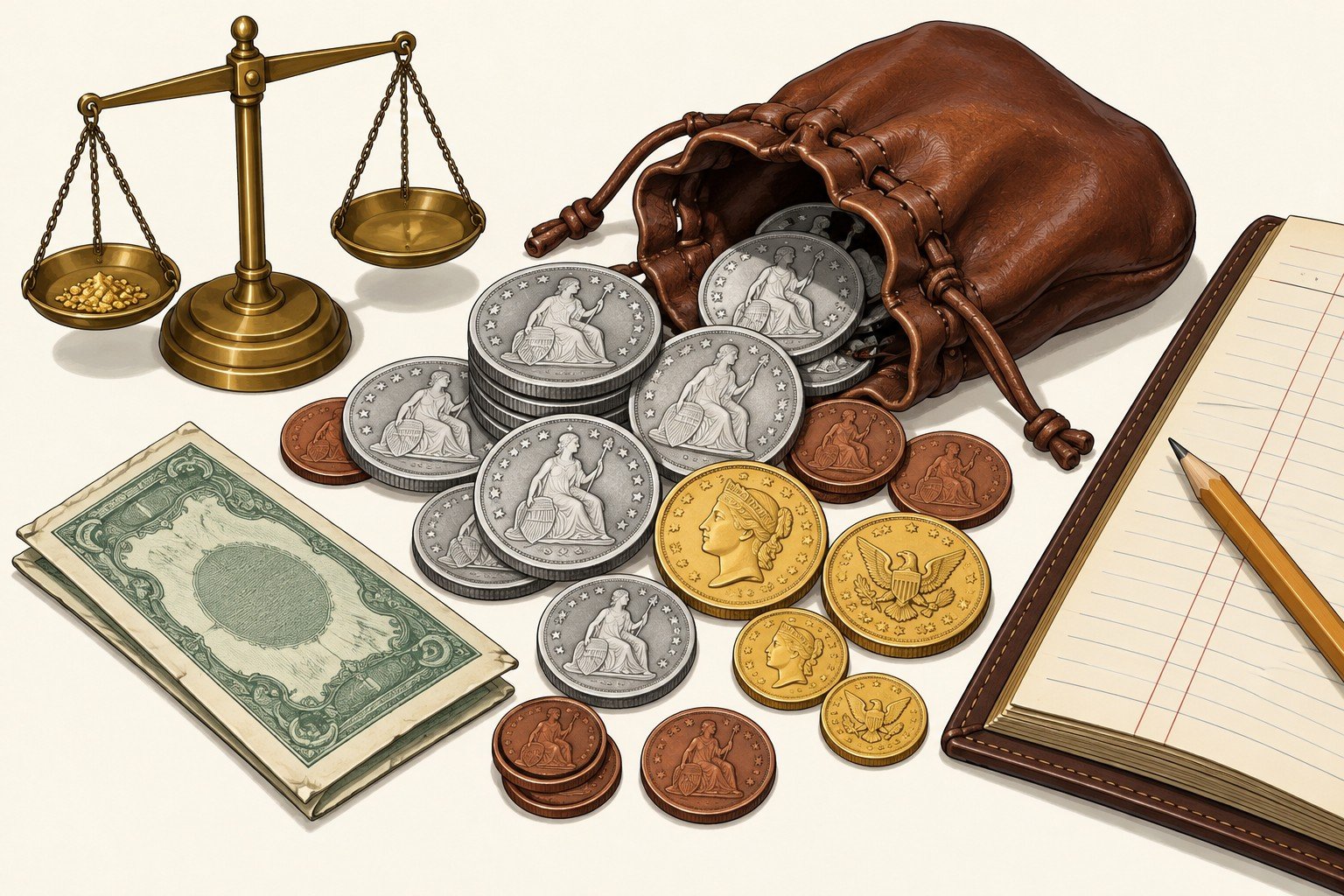
The money of the Territories is the U.S. dollar, divided into 100 cents. Three things shape what a character carries.
-
Greenbacks and coin. Paper currency (United States Notes, called greenbacks) is legal tender. The Supreme Court struck it down for older debts in 1870 (Hepburn v. Griswold) and upheld it the next year (Knox v. Lee, 1871). Coin, especially gold, is worth more than paper while paper stays off the gold standard.
-
A seller may quote a price “in currency” or “in coin.” The 1872 edition of Crofutt’s Trans-Continental Tourist’s Guide quotes railroad meals at 75 cents to a dollar “currency.” The Specie Payment Resumption Act, signed 14 January 1875, set 1 January 1879 for paper to become redeemable in gold, so the whole play range sits before resumption. The New York price of $100 in gold ran from about $119 to $162 in paper in 1869, $110 to $123 in 1870, and $106 to $119 across 1871 to 1874; it stood near $111 in 1876. The New York figures are the working premium in Cheyenne and Denver.
-
The Coinage Act of 12 February 1873 ended the coinage of the standard silver dollar, authorized the trade dollar for the China trade, and changed the weight of the small silver coins. A character in 1873 or later sees few new silver dollars, and the change was argued over for years afterward. The same mix of greenbacks, fractional currency, gold coin, and residual silver that circulated in the West generally is what a character carries in Wyoming or Colorado.
-
Gold dust was money in the Colorado camps of 1859 to 1862, weighed at $12 to $20 an ounce by district. In the 1870s a placer miner sells his dust to a bank or to the Denver assay office, which has bought gold since 1863. Dust no longer routinely passes over a store counter.
Sourcebook Units
The cited sourcebooks price their entries in one shared unit. This book does not use it as money.
- The unit beside an echoed row is a cross-reference to the sourcebook's row, so a reader can find the entry. It is not a rate, and no divisor turns it into dollars.
- The sourcebook is canon for the stat line. The dollar price is this book's, from the record of the corridor in 1869 to 1876.
- A GM who wants a sourcebook item this book does not price uses the nearest price band (Prices, below), not the unit.
- Small change under a nickel is not tracked. A character in a town can buy a postal card, a match, a cup of water or a cup of coffee without spending anything that matters. The Stable's daily upkeep and hired-help figures are not used; see Keeping a Horse in Era Rules and the wage table.
What Things Cost
Nine figures to hold in mind. Every one is in the tables that follow.
| Item | Price | Year, place and source |
|---|---|---|
| A shot of whiskey | $0.25 | 1870s saloons |
| A meal | $0.50 at a town restaurant; $1 at a Union Pacific eating house | 1872 to 1874, along the line; Crofutt 1872 and 1874 |
| A day's board | $1.10 (a boarding house at $7.50 a week) | Cheyenne, 1877; Strahorn 1877 |
| A doctor's visit | $3 | Denver, 1871; Denver Medical Association fee bill |
| A Colt Single Action Army | $17.50 | 1873 to 1876 |
| A stock saddle | ~$35 | 1870s; Montgomery Ward 1875 |
| A Winchester Model 1873 | $45 | 1873 to 1876; $50 at launch |
| A saddle horse | $50 | Cheyenne, 1877 to 1879; Strahorn |
| A team and wagon | $300 | Cheyenne, 1877 to 1879; Strahorn |
Where a corridor figure exists it is used, even when it is dated 1877 to 1879 (Strahorn's two Cheyenne guides), because prices in the corridor moved little between 1872 and 1879 and the record for 1869 to 1876 itself is thin. Where no corridor figure exists, a national figure of the 1870s is used and marked ~. A Cheyenne store adds freight to an eastern catalog price, about a quarter.
Wages and Income
Wages are by the month unless the row says otherwise; "and board" means fed and housed. A character paid by the month with board spends little of it on food and lodging; a day laborer does not. This is a reference for rewards, hired help and a Role's Pay line, not a bookkeeping rule.
| Work | Pay | Year, place and source |
|---|---|---|
| Army private | $13 a month | from 1 July 1871 (reduced from $16); Act of 15 May 1872 |
| Army corporal; sergeant; first sergeant | $15; $17; $22 a month | 1872 to 1876; Act of 15 May 1872 (17 Stat. 116) |
| Army second lieutenant; first lieutenant; captain | $1,400; $1,500; $1,800 a year (about $117, $125 and $150 a month); $100 a year more if mounted | from 1870; Act of 15 July 1870, sec. 24 |
| Cowhand, ranch hand or herder | $30 a month and board (range $25 to $40) | Cheyenne, 1877; Strahorn 1877 |
| Cowhand, top hand | ~$45 a month (range $40 to $75) | 1870s |
| Trail boss | ~$100 a month for the drive | 1870s |
| Wrangler | ~$25 a month | 1870s |
| Horse breaker | ~$5 a head, about $35 a month | 1870s |
| Teamster, hired | $28 a month and board | Cheyenne, 1877; Strahorn 1877 |
| Teamster with his own team, hauling | $8 a day gross | Leadville, 1879, a boom price; Strahorn 1879 |
| Stage driver | ~$50 a month | 1870s |
| Laborer | $2 a day; $25 a month and board | Cheyenne, 1877 to 1879; Strahorn |
| Carpenter; bricklayer; blacksmith | $3; $4; $3.50 a day | Cheyenne, 1877 to 1879; Strahorn |
| Hard-rock miner | ~$3 a day (range $2.50 to $3.50) | Colorado, 1869 to 1876; Strahorn 1879 for Leadville |
| Coal miner, Union Pacific mines | ~$2.50 a day, paid by the ton (about $2.13 a ton at Rock Springs before the 1875 cut) | Wyoming, 1870s |
| Railroad construction labor | $3 a day | 1869 |
| Railroad section hand | ~$1.75 a day; a Chinese crew about $30 a month | Wyoming, 1870; one summary gives $32.50 Chinese, $52 white |
| Store clerk or salesman | $75 a month; a head clerk $100 | Cheyenne, 1877; Strahorn 1877 (range $75 to $125) |
| Bookkeeper; bank teller | ~$90; ~$125 a month | 1870s; Strahorn 1879 gives eastern rates, more in the West |
| Railroad station agent; telegraph operator | ~$75; ~$60 a month | 1870s |
| Teacher | $60 a month (a man), $50 (a woman) | Colorado, 1873; Colorado Superintendent of Public Instruction |
| Minister or missionary | ~$800 a year, about $67 a month | 1870s |
| Doctor, town practice | fees (Doctor, Medicine and Nursing); ~$150 a month net | Denver, 1871; derived from the Denver Medical Association fee bill |
| Lawyer | ~$10 a case before a justice; ~$100 a district court case; ~$25 a land matter | 1870s |
| Newspaper: a hired editor; a printer | ~$30 a week; ~$20 a week | 1870s; Strahorn 1879 |
| Newspaper: a daily by subscription; a single copy | $12 a year; ~10 cents a copy | Cheyenne, 1867 and the 1870s; the Cheyenne Leader at $12 a year and 15 cents a copy in 1867 |
| Hotel cook; waiter; barkeeper | ~$60 a month and board; ~$45 a month with board; ~$25 a week | 1879; Strahorn 1879 |
| Domestic servant or cook in a family | $25 a month and board | Montana, 1870; Leadville, 1879; Treasury, Special Report on Immigration, 1870; Strahorn 1879 |
| Laundress, town | ~$1.50 a dozen pieces; ~$30 to $40 a month | Leadville, 1879; Strahorn 1879 |
| Army laundress | $1 a soldier a month plus rations and quarters; about $25 a month | 1866 to 1870s, from other posts, not Fort Laramie; National Park Service |
| Civilian scout or guide | ~$75 a month from the Army; a chief of scouts ~$100; ~$5 a day by the job | 1870s; Bridger's pay |
| Interpreter at an agency | ~$40 a month | 1870s |
| Post trader's clerk | ~$60 a month and board | 1870s |
| Deputy U.S. marshal | fees only: $2 an arrest, $2 a writ served, $2 a day attending court, 6 cents a mile; ~$40 a month for a busy deputy | 1870s; Revised Statutes sec. 829 |
| County sheriff; deputy sheriff | ~$1,500 a year with fees; ~$60 a month | 1870s |
| Town marshal; policeman | ~$100; ~$65 a month | Cheyenne and Denver, 1870s |
| Guard or hired gun on a stage or a freight outfit | ~$75 a month; a shotgun messenger ~$100 | Black Hills road, 1876 |
| Buffalo hunter | ~$2 a hide at the railroad | 1872 to 1876 |
| Trapper | beaver ~$3; wolf ~$1.50 and a bounty; elk hide ~$3 | 1870s |
| A buffalo robe in trade at a post | ~$4 in goods | 1870s |
Rewards and hire. Use these as the going rates for a hired gun, a guide, a drover or a witness unless the adventure says otherwise.
| Job | Pay |
|---|---|
| A day's casual labor | $2.00 |
| A posse member, a deputy for a day | ~$2.00 and the horse's keep |
| A guide or tracker, a day | ~$3.00 to $5.00 |
| A drover on a short drive, the month | $30.00 and board |
Prices
Price bands
When no price is printed, use a band. A band says how much a thing is worth against a wage, and a GM who knows the band never needs a catalog.
| Band | Dollars | Examples |
|---|---|---|
| Trifle | up to $0.25 | Small change that is not tracked: a newspaper, a shot of whiskey, a box of matches |
| Small | $0.30 to $2.00 | A meal, a Knife, a bridle, a night's bed, a box of cartridges, a saddle blanket |
| Moderate | $2.05 to $10.00 | A hat, a pair of boots, a Hatchet, a used revolver, a Derringer, a pack saddle, a week's board |
| Dear | $10.05 to $30.00 | A Colt, a coach gun, a cowhand's month, a Pony, a town suit, a doctor's bag |
| Costly | $30.05 to $75.00 | A Winchester, a Sharps, a saddle horse, a stock saddle, a mule, a Draft Horse |
| Great | over $75.00 | A team and wagon, a Fine horse, a transit, a hand press, a claim |
What the record gives
| Item | Price | Year, place and source |
|---|---|---|
| Postal card | $0.01 | from 12 May 1873; USPS |
| First-class letter | $0.03 per half ounce | 1863 to 1883; USPS |
| Meal at a Union Pacific eating house | $0.75 to $1.00 in currency; $1 by 1874 | 1872 and 1874, along the line; Crofutt |
| Accommodations at a principal station, for a stop-over of a day or two | $3 to $4 a day | 1872, along the line; Crofutt 1872 (a hotel's day rate; Strahorn gives the same $3 to $4 at Cheyenne in 1877) |
| First-class hotel, Cheyenne | $3 to $4 a day; $12 to $15 a week | 1877; Strahorn |
| Boarding house, Cheyenne | $6 to $9 a week | 1877; Strahorn |
| Flour, 100 lb sack | $3 to $4.50 | Cheyenne, 1877; Strahorn |
| A doctor's visit | $3 by day; $5 at night | Denver, 1871; Denver Medical Association fee bill, 15 June 1871 |
| Rail, Cheyenne to Denver | $7 | 1877; Strahorn |
| Telegraph, ten words, Cheyenne to Chicago; to Deadwood | $1; $2.50 | 1877; Strahorn |
| Telegraph, ten words, by distance | $0.40 to $2.50 (New York to Washington $0.40; to Chicago $1; to San Francisco $2.50), 4 to 25 cents a word beyond ten | 1874, Western Union schedule; Places and Campaign Tools, Communications |
| Fine for carrying a weapon in Cheyenne | $5 to $100, or up to 30 days | ordinance of 30 September 1867; Wyoming Almanac |
Doctor, medicine and nursing
The Denver Medical Association adopted a fee bill on 15 June 1871, and the Colorado Medical Society adopted the same bill on 19 September 1871. These are its rates. A doctor on the Cheyenne side charged about the same.
| Service | Price |
|---|---|
| A visit in town, by day | $3 (two or more visits the same day $5) |
| A visit at night, 10 p.m. to 6 a.m. | $5 |
| A visit to the country | $5 within two miles, then $2 a mile by day and $3 by night |
| Office advice and a prescription | $2 |
| A second doctor called in consultation | $10 |
| Setting a fracture or a dislocation | $25 ($15 to $100 by the bone) |
| An amputation: a finger or toe; an arm or leg | $15; $75 |
| Chloroform or ether given | $10 |
| Attendance at a birth | $30 |
| A surgeon's work on a gunshot or knife wound, with dressings | ~$25; ~$75 with an amputation |
| A day of nursing by a hired woman at a boarding house or hotel | ~$1.50 |
Medicines come from The Apothecary and are in the essential gear table below.
Availability by Place and Year
Availability uses the sourcebook tags: Common, Restricted, Military and Rare. The tag says whether a seller exists, not how much a seller wants.
| Place | What the characters can buy |
|---|---|
| Cheyenne | Everything Common. Cheyenne was, in Crofutt's words of 1872, the central distributing point for freight and travel bound for Colorado, New Mexico and the country to the north. The Cheyenne Leader carried advertisements for grocers, auctioneers and livery stables. Restricted goods need a reason or an introduction. Military goods come from the Army depot, a post trader, or a person who got them there. |
| Denver | Everything Common, with the same limits. It is the end of the Denver Pacific, which opened to Denver on 24 June 1870; goods reached it from Cheyenne by rail from that date. |
| Railroad towns and Army posts | Common goods in a store or from a post trader, who sells to travelers and settlers as well as to the garrison. |
| The plains, ranches, stations, roads | What a ranch, a freighter, a stage station or a trader carries: ammunition, flour, coffee, blankets, a horse. Anything else is a trip to town. |
| Tribal Nations' trade | The traders and the nations exchange goods that include trade guns, powder, cloth and horses. |
Dates of introduction
An item is available from the year in the table, not before. Items in the aka lines of the sourcebooks that fall after 1876 do not appear in this book.
| Entry | Real model | In this era from | Source |
|---|---|---|---|
| Cap-and-Ball Revolver | Colt Navy, Remington New Model | in use throughout | Colt Navy made to 1873, Remington New Model to 1875; standard references |
| Derringer | Remington double derringer | 1866 | Remington Arms records (production from 1866) |
| Pocket Revolver | Colt Pocket, Smith & Wesson No. 1 | in use throughout | Colt Pocket made to 1873; Smith & Wesson No. 1 from 1857; standard references |
| Breechloading Rifle | Springfield trapdoor | Model 1866 converted to .50, Model 1873 adopted 1873 | NPS Springfield Armory |
| Breechloading Rifle | Sharps | in use throughout | Percussion Sharps and conversions throughout; the Model 1874 cartridge sporting rifle in production from 1871 (Sellers, Sharps Firearms; Sharps factory letter, Rock Island Auction) |
| Buffalo Rifle | Remington Rolling Block, Sharps | Rolling Block in service from 1867; Sharps Model 1874 in production since 1871; the .50-2½-inch Sharps, the "Big Fifty", from July 1872 | Sellers, Sharps Firearms; Remington histories |
| Lever-Action Repeater | Winchester Model 1866 | 1866 | Cody Firearms Museum, Winchester records |
| Lever-Action Repeater | Winchester Model 1873 | 1873 | HistoryNet; Cody Firearms Museum |
| Single-Action Revolver | Colt Single Action Army | 1873 | NPS, "1873 Colt Revolver" |
| Single-Action Revolver | Smith & Wesson Schofield | 1875 | First Army contract September 1874; delivered from 1875 |
| Single-Action Revolver | Remington 1875 | 1875 | Introduced 1875; standard references |
| Coach Gun | Double-barrel shotgun | in use throughout | The ordinary shotgun of the century; standard references |
| Trade Gun | Flintlock trade gun | in use throughout | The Black Powder Armory |
The 1873 line. The Single Action Army and the Model 1873 Winchester both begin in 1873. A game set in 1869 to 1872 gives characters the Cap-and-Ball Revolver, a conversion or the Smith & Wesson revolvers, and the Winchester Model 1866 or the Sharps. A cartridge conversion of a cap-and-ball revolver uses the Cap-and-Ball Revolver's line with a two-maneuver reload; a converted gun is $14 new, and converting a gun the character owns is ~$4.
The law of the gun in town
The record covers Cheyenne better than Denver.
-
Cheyenne, 30 September 1867. An ordinance barred everyone but the police from carrying firearms, bowie knives, daggers, slungshots or other dangerous weapons, openly or concealed. The fine ran from $5 to $100, or up to 30 days in jail, or both. A stranger had 30 minutes after notice to comply (Wyoming Almanac).
-
Wyoming Territory, 1875. The territorial act of 1875 (Session Laws ch. 52; compiled in 1876 as Compiled Laws 352) made it unlawful to carry any firearm or other deadly weapon, openly or concealed, within a city, town or village. A non-resident was in breach only after a peace officer's notice. The offense was a misdemeanor: a fine of $5 to $50, and 5 to 20 days in jail if the fine went unpaid.
-
Colorado Territory, 1862. An act to prevent the carrying of concealed deadly weapons in the cities and towns of the territory (1862 Colo. Sess. Laws 56) made carrying a concealed pistol, bowie knife, dagger or other deadly weapon in any city, town or village an offense tried before a justice of the peace and fined $5 to $35, with sheriffs, constables and police on duty exempt; the act was carried into the 1868 compilation. It says nothing of a weapon carried openly. The GM sets whether loaded pistols may be carried in the open on Denver's main streets.
NOTICE: Carrying in Town
A character who goes armed on a street in Cheyenne draws the attention of the first officer who sees the weapon. The officer warns a stranger, and on a second sighting the character is fined or jailed. The fine is $5 to $100 at the officer's choice under the Cheyenne ordinance, or $5 to $50 under the territorial act of 1875. A sheriff, a deputy and a peace officer on duty are exempt. In Denver, apply the Colorado territorial act of 1862: the same practice for a concealed weapon, with a fine of $5 to $35, and none for a long gun carried openly. A GM who wants gunplay in town makes it a crime, and the crime has consequences. See Running the Era.
The Essential Gear Table
These are stats from sourcebooks for the Exodus NDS system. The Price column is the sourcebook's unit, kept as a cross-reference; the dollar price is in the Dollars column and is this book's.
Firearms (The Black Powder Armory, Master Tables)

| Weapon | Skill | Dmg | Crit | Range | Enc | Price | Dollars | Avail | In this era from | Qualities |
|---|---|---|---|---|---|---|---|---|---|---|
| Derringer | Light Ranged | 5 | 4 | Short | 0 | 150 | ~$8 | Common | 1866 | Concealable 3, Limited Ammo 2, Inaccurate 1 |
| Pocket Revolver | Light Ranged | 5 | 4 | Short | 1 | 150 | ~$10; a cheap copy ~$3 | Common | throughout | Concealable 2, Limited Ammo 5 |
| Cap-and-Ball Revolver | Light Ranged | 5 | 3 | Medium | 1 | 300 | ~$12 new; ~$6 used | Common | throughout | Limited Ammo 6 |
| Dragoon Revolver | Light Ranged | 6 | 3 | Medium | 2 | 400 | ~$8 used | Common | throughout | Limited Ammo 6, Cumbersome 2 |
| Single-Action Revolver | Light Ranged | 6 | 4 | Medium | 2 | 350 | $17.50 | Common | 1873 | Accurate 1, Limited Ammo 6 |
| Rifle-Musket | Heavy Ranged | 8 | 3 | Long | 4 | 300 | ~$5 surplus | Military | throughout | Prepare 2 |
| Breechloading Rifle | Heavy Ranged | 8 | 3 | Long | 4 | 450 | $40 Sharps; ~$12 Springfield surplus | Military | throughout | Prepare 1 |
| Buffalo Rifle | Heavy Ranged | 9 | 2 | Extreme | 6 | 900 | $45 Sharps; ~$32 Remington | Common | 1867 | Accurate 1, Prepare 1, Cumbersome 3 |
| Lever-Action Repeater | Heavy Ranged | 7 | 3 | Medium | 3 | 450 | $45 Winchester; ~$12 Spencer surplus | Common | 1866 | — |
| Coach Gun | Heavy Ranged | 8 | 3 | Short | 3 | 300 | ~$12 muzzle-loader; ~$35 breech-loader | Common | throughout | Blast 4, Knockdown, Vicious 2, Limited Ammo 2 |
| Trade Gun | Heavy Ranged | 7 | 4 | Medium | 3 | 120 | ~$5 | Common | throughout (old stock) | Prepare 2, Unreliable |
| Lasso | Light Ranged | — | — | Short | 1 | 10 | ~$1.50 rope; ~$6 rawhide riata | Common | throughout | Ensnare 2, Limited Ammo 1 |
The "Dollars" and "In this era from" columns are this book's; every other column is the sourcebook's. The Colt, Winchester and Sharps dollars are makers' list prices; Strahorn's Cheyenne outfitters quote a breech-loading rifle at $35 to $50. The others are set from the government surplus sales of 1870 to 1875, which put thousands of used arms on the market at a few dollars each.
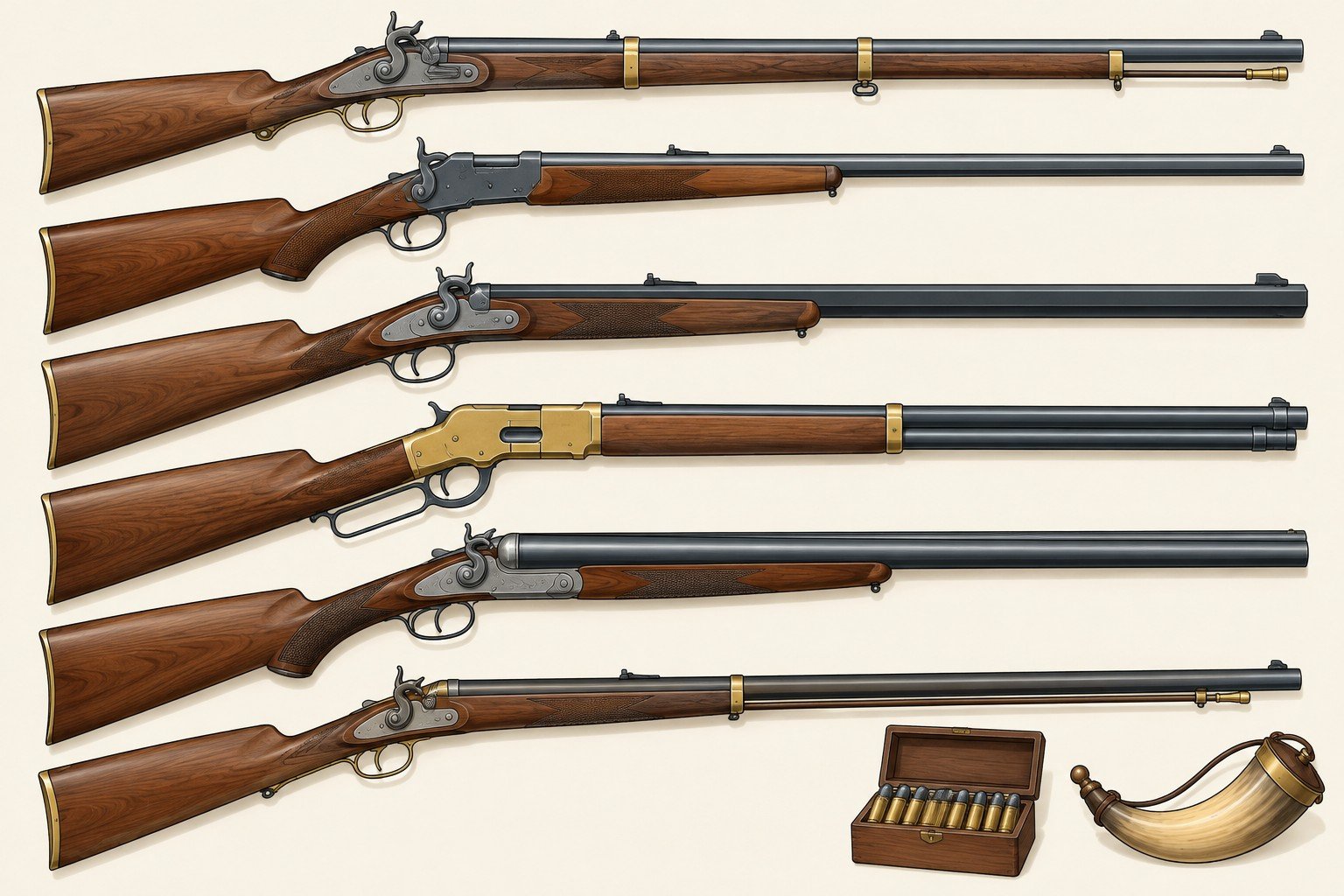
Reloading and weather are in The Black Powder Armory, Reading an Entry. The Single-Action Revolver reloads in two maneuvers, and its Fanning rule is in the book's Percussion and Cartridge Arms chapter. The Cap-and-Ball Revolver reloads in six maneuvers, or two with a spare cylinder (60; $3).
Old stock. The Black Powder Armory says a flintlock is still a trade gun in 1870 at half the listed price. At the table, a Trade Gun costs 60 in the sourcebook's units and $5 at a trader's counter throughout 1869 to 1876 (the sourcebook's example is 1870).
Aliases. A Dragoon Revolver is a Colt Army or Dragoon; a Rifle-Musket is a Springfield 1861 or an Enfield; a Breechloading Rifle is a Sharps or a Springfield trapdoor; a Buffalo Rifle is a Sharps or a Remington Rolling Block; a Lever-Action Repeater is a Henry, a Winchester 1866 or 1873, or a Spencer carbine (aliases from The Black Powder Armory). A Single-Action Revolver is a Colt Single Action Army, a Smith & Wesson Schofield or a Remington 1875, and none of the three exists before 1873 (see Dates of introduction). A Smith & Wesson or a Remington is about $16.
The civilian Sharps. A civilian Sharps or Remington sporting rifle is Common in this era; the Military tag on the Breechloading Rifle is for the Army's Springfield.
Carbines. For The Stable's saddle rules (a pair of Saddle holsters carries a carbine; a pistol or a carbine ignores the Bane Die for firing from a mount that moved), a Lever-Action Repeater bought as a Spencer or Winchester carbine and a Breechloading Rifle bought as a Sharps or Springfield carbine count as carbines, with the same line as the rifle. A Winchester carbine is $40. The Rifle-Musket and the Buffalo Rifle never do.
Blades and tools (The Fantasy Armory, Master Weapons Table)
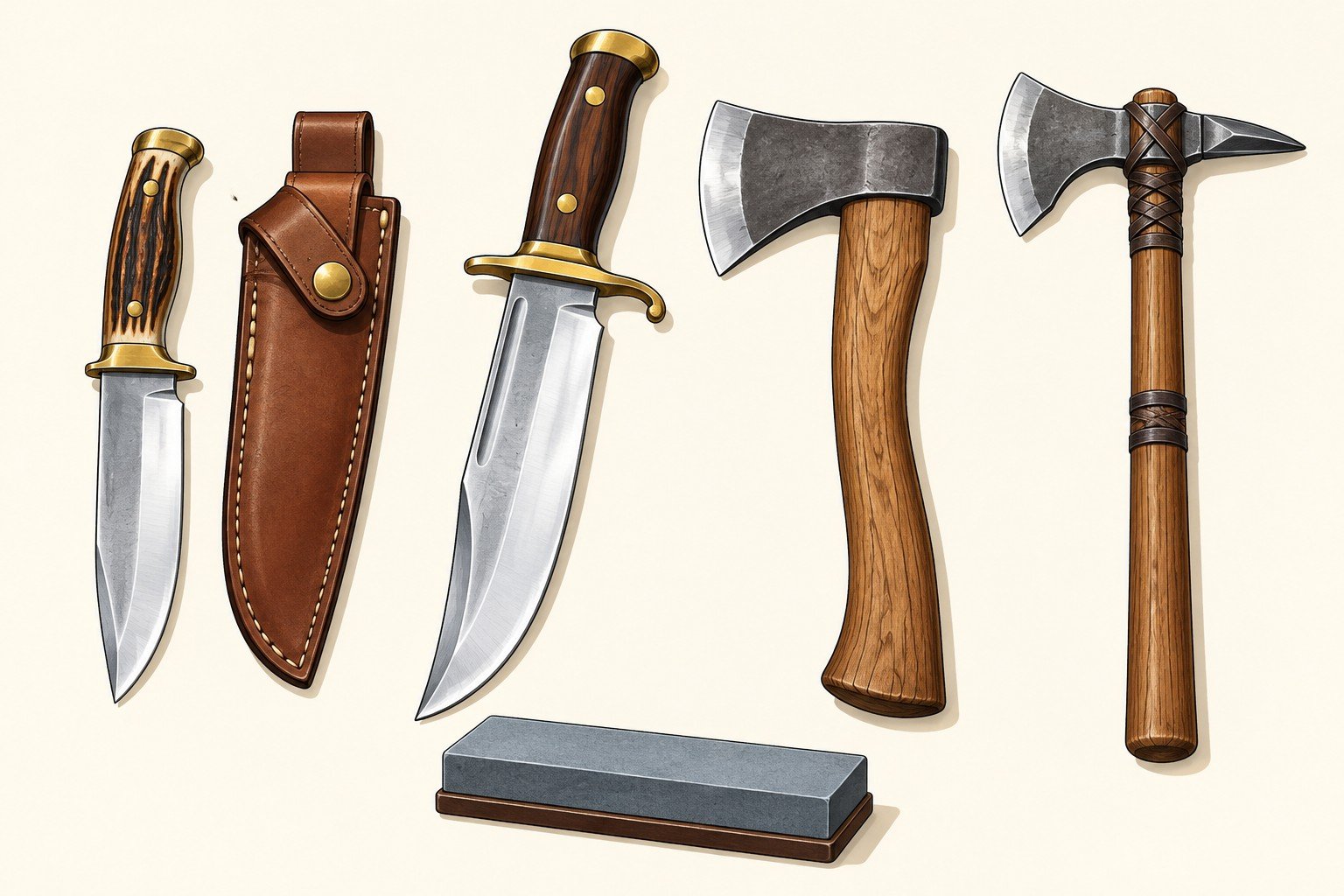
A Knife is a belt knife or a bowie knife ($2; a pocket knife $2 at a post) (aliases from The Fantasy Armory). A surplus cavalry saber, the Sabre in The Fantasy Armory (Military), is ~$3 at a surplus sale; an officer draws his from the quartermaster. Table on next page.$0.75). A Hatchet is a camp axe or belt axe ($1.25 at a hardware counter), and a trade tomahawk (
Bows (The Ranged Armory, Master Weapons Table and Ammunition)
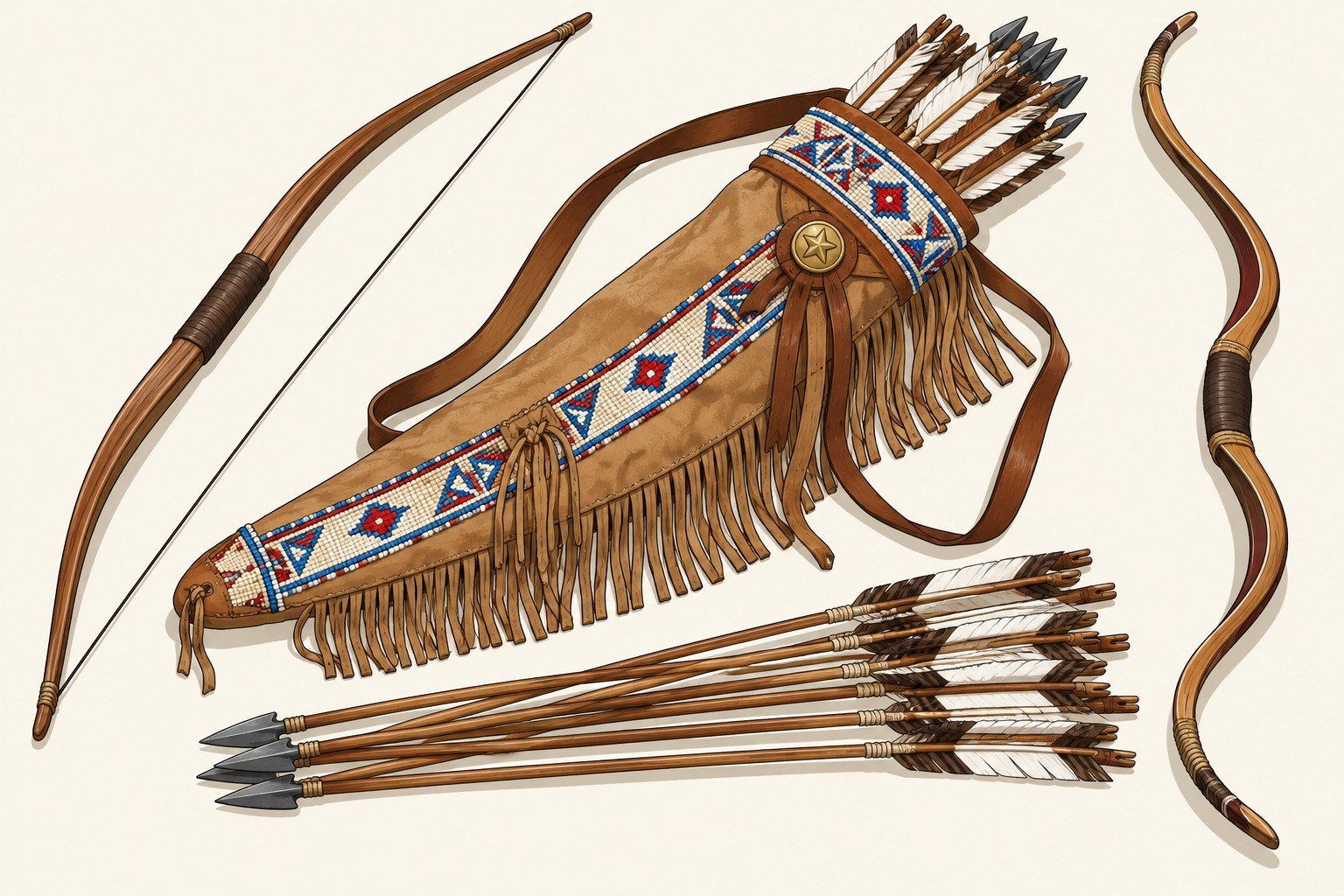
Arrow (Ammunition): Cost 10 for 20, fits all heads; ~$1 for twenty, in trade. The bow dollars are set by this book: a Plains bow was made by its user, not bought, and the only retail record is the curiosity trade, $2 to $10. The unit prices are the sourcebook's and are not trade prices among the nations. Table on next page.
| Weapon | Dmg | Crit | Range | Enc | Price | Dollars | Avail | Type | Qualities |
|---|---|---|---|---|---|---|---|---|---|
| Knife | +1 | 3 | Engaged | 1 | 40 | ~$2 | Common | Thrusting, Cutting | — |
| Hatchet | +2 | 3 | Engaged | 1 | 90 | ~$1.25 | Common | Cutting | Vicious 1, Sunder |
| Short Bow | 6 | 3 | Medium | 1 | 200 | ~$5 | Common | Thrusting | Cumbersome 2, Point Blank 1 |
| Horse Bow | 7 | 3 | Medium | 1 | 625 | ~$8 | Common | Thrusting | Accurate 1, Fragile 1, Cumbersome 2, Point Blank 1 |
Mounts (The Stable, Master Tables, Horses and Their Kin and Beasts of Burden and War)
| Mount | Scale | Speed | Wounds | Res | Def | Carry | Travel | Price | Dollars | Avail | Barding | Traits |
|---|---|---|---|---|---|---|---|---|---|---|---|---|
| Pony | 1 | 2 | 9 | 1 | 0 / 0 | 10 | 20 | 150 | ~$25 | Common | Equine, Light | Small Mount, Hardy |
| Riding Horse | 2 | 2 | 11 | 2 | 0 / 0 | 16 | 30 | 300 | $50 | Common | Equine, Medium | Swift, Temper 1 |
| Mountain Horse | 2 | 1 | 12 | 2 | 0 / 0 | 18 | 25 | 400 | ~$60 | Common | Equine, Medium | Sure-Footed, Hardy, Steady |
| Mule | 2 | 1 | 10 | 2 | 0 / 0 | 16 | 20 | 200 | $50 | Common | Equine, Medium | Sure-Footed, Pack Animal, Steady, Temper 1 |
| Donkey | 1 | 1 | 8 | 0 | 0 / 0 | 10 | 20 | 80 | ~$15 | Common | Equine, Light | Sure-Footed, Pack Animal, Temper 1 |
| Draft Horse | 2 | 1 | 16 | 3 | 0 / 0 | 24 | 20 | 350 | $75 | Common | Equine, Medium | Draft 2, Steady, Poor Combat Mount |
| Ox | 2 | 1 | 12 | 2 | 0 / 0 | 22 | 12 | 150 | $45 | Common | Bovine, Light | Draft 2, Steady, Slow |
Price is for a healthy adult saddle-trained animal (The Stable, Reading an Entry). The dollars are the Cheyenne outfitters' quotations of 1877 and 1879 (Strahorn: saddle horses $40 to $75, pack horses and saddle mules $40 to $60, a team of horses $100 to $250, oxen $80 to $100 a yoke); the Pony, the Mountain Horse and the Donkey are set by this book. A Donkey is the burro of the Colorado mining camps. The Stable has no entry for the Texas cow pony or the horses of the Tribal Nations; use the Riding Horse row for either, or the Pony row for a small animal (see Horses, Tack and Livery). A cow pony is ~$30; an Indian pony is ~$25 in trade.
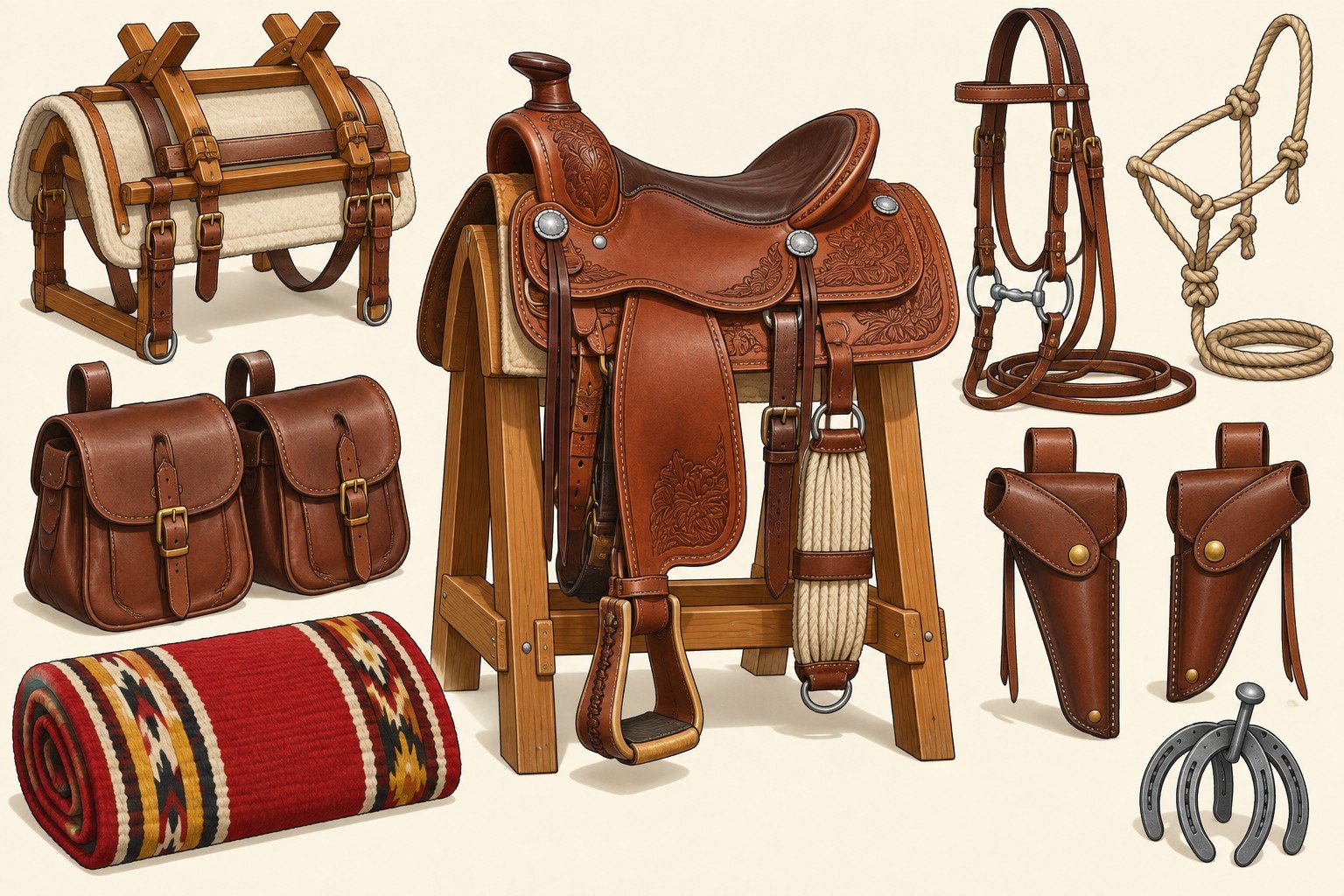
Tack (The Stable, Tack, Harness, and Platforms)
| Item | Enc | Price | Dollars | Avail | Effect |
|---|---|---|---|---|---|
| Bridle and bit, or halter | 0 | 10 | ~$2.50; a halter ~$0.75 | Common | Needed to ride. Without it, add 2 Bane Dice to Riding checks |
| Riding saddle | 2 | 90 | ~$35 stock saddle; ~$8 surplus McClellan; ~$6 Plains pad saddle | Common | The ordinary saddle. Riding bareback adds 1 Bane Die to Riding checks and to any check to stay mounted |
| Pack saddle | 2 | 50 | ~$8 | Common | The animal's Carry is 4 higher for baggage and it cannot be ridden |
| Saddlebags, pair | 1 | 5 | ~$3 | Common | Hold 4 Encumbrance where the rider can reach it |
| Saddle holsters, pair | 1 | 30 | ~$4 | Common | Two pistols or a carbine. Drawing from one is free once a turn |
| Bow case and quiver | 1 | 25 | ~$5 plain | Common | A strung bow and thirty arrows at the saddle. Readying the bow is free |
| Harness and collar | 2 | 40 | ~$20 per animal | Common | Needed to draw a vehicle. One for each animal in the team |
| Horseshoes, set | 0 | 4 | ~$2 shod all round | Common | Replaced monthly. An unshod horse on roads is lamed on any Calamity while travelling |
Tack dollars are set from 1870s saddlery and hardware lists and Montgomery Ward's 1875 catalogue; the pad saddle is set by this book.
Medicine (The Apothecary, The Apothecary's Shelf and The Industrial Pharmacy)
| Substance | Pot | Onset | Lasts | Limit | Vector | Price | Dollars | Avail | Period | Qualities |
|---|---|---|---|---|---|---|---|---|---|---|
| Healing Salve | — | — | 1 day | 1 | Applied | 20 | ~$0.35 a jar | Common | Old World | None |
| Poppy Tincture | 3 | 10 minutes | 4 hours | 2 | Ingested | 30 | ~$0.25 a 2 oz bottle | Common | Old World | Habit 2 |
| Strong Drink | 2 | 10 minutes | 2 hours | 2 | Ingested | 2 | ~$0.25 a shot; ~$1.50 a bottle | Common | Old World | Habit 1 |
| Antiseptic | — | — | — | — | Applied | 5 | ~$0.40 | Common | Industrial | None |
| Morphine | 3 | 1 round | 4 hours | 2 | Injected | 25 | ~$1 a vial | Restricted | Industrial | Habit 3 |
| Patent Medicine | 1 | — | — | — | Ingested | 1 | ~$1 a bottle | Common | Industrial | None |
| Emetic | — | None | — | — | Ingested | 5 | ~$0.15 | Common | Old World | None |
| Chloroform | 2 | None | sleep 10 minutes | — | Inhaled (held pad) | 15 | ~$0.75 a 4 oz bottle | Common | Industrial | None |
-
Healing Salve: Applied before a full night's rest, the patient recovers 2 additional Wounds from that rest
-
Poppy Tincture: Recover 3 Strain, and ignore the ongoing penalty of one Minor or Moderate Critical Injury for the duration. Side effect: add 1 Bane Die to Perception and Readiness checks
-
Strong Drink: Add 1 Boon Die to checks made to resist fear, and recover 1 Strain. Side effect: add 1 Bane Die to Agility and Intellect checks
-
Antiseptic: Add 1 Boon Die to Medicine checks made to heal Wounds or to remove a Critical Injury
-
Morphine: Recover 4 Strain, and ignore the ongoing penalties of Critical Injuries up to Severe for the duration. Side effect: Disoriented
-
Patent Medicine: None. A patient who believes in it recovers 1 Strain
-
Emetic: A Purge made with an emetic needs no check. Side effect: the patient suffers 2 Strain and is Staggered on the next turn
-
Chloroform: 3 Strain each round the pad is held (Interval Round, Course 5), then sleep for 10 minutes. The pad must be held over the face; the target must be Restrained, Immobilized, asleep or unaware, and stays exposed only while it is held
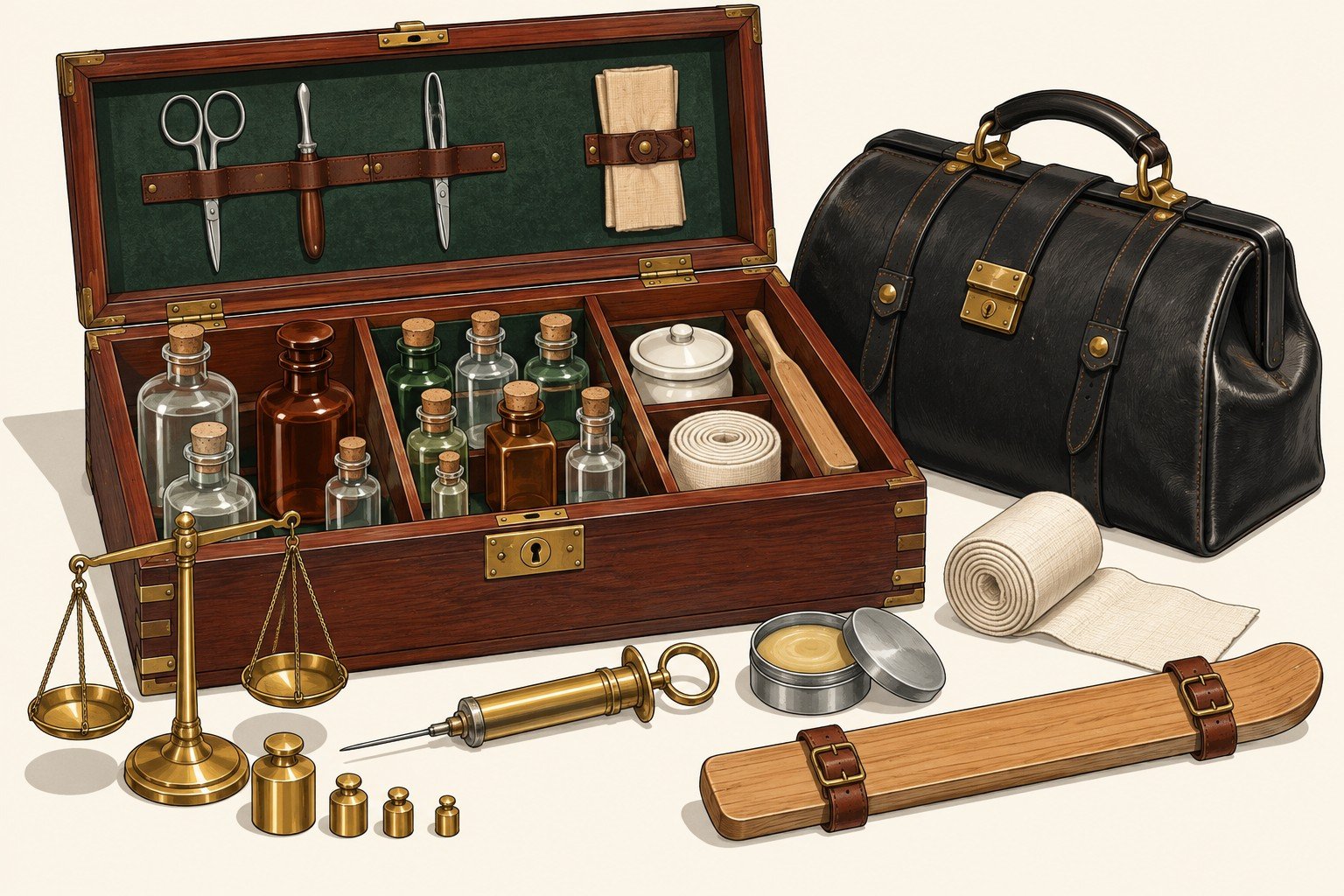
Poppy Tincture is laudanum and opium; Antiseptic is carbolic or iodine in this era; Chloroform is also ether, and Emetic is mustard water, salt water or ipecac (aliases from The Apothecary). Chloroform is the surgeon’s anaesthetic. The dollars are druggists’ prices of the 1870s; the dollar bottle of patent medicine was universal, and the sourcebook’s unit prices a dose where the store sells a bottle. A hypodermic syringe is $4 and quinine for the ague $2.50 an ounce. Morphine and laudanum are sold across a druggist’s counter without a prescription throughout the range; the first state prescription laws come in the 1880s and later. Carbolic antiseptic was in the hands of some American surgeons from about 1870 and in general use only by the late 1870s, so a doctor who carries it is ahead of his neighbours. The Apothecary treats Restricted Industrial entries as Common to anyone willing to sign a chemist’s poison book before the laws arrive. The Denver fee bill of 1871 charges $10 for giving chloroform or ether, so anaesthetics were ordinary Denver practice by then.
Horses, Tack and Livery
The Stable keeps every horse number. This section prices the animal, the grade and the hire. Upkeep is not priced: living expenses cover it in towns and on the road, and the Keeping a Horse rule in Era Rules governs a horse away from the road.
Buying a horse
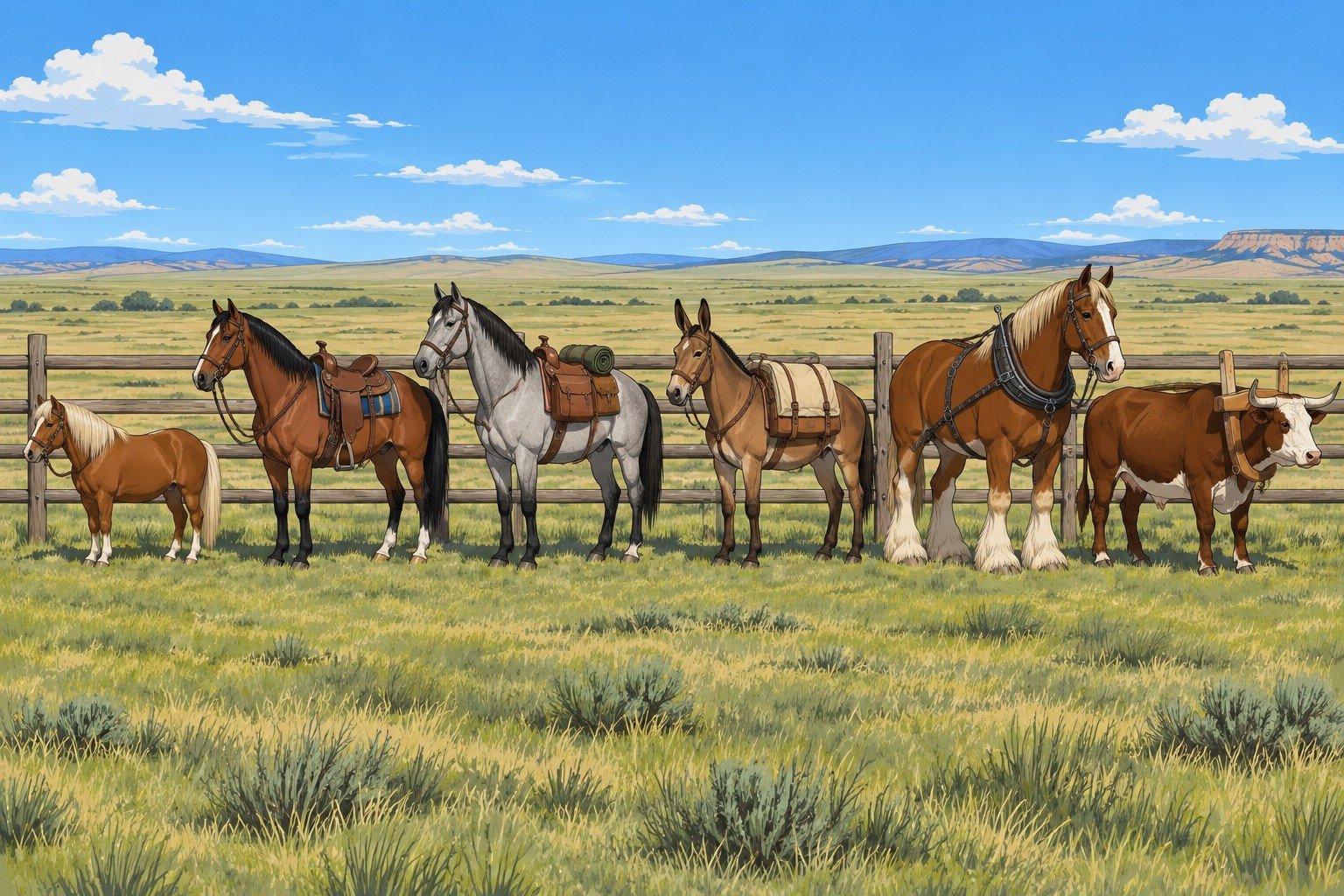
The price in the Mounts table is for a Sound animal that is saddle-trained. The Stable (Training and Keeping) sets the grade multipliers; the dollar prices below are this book's (Cheyenne outfitters' prices, 1877 to 1879), rounded to a dollar a dealer would quote.
| Grade | Price rule | Riding Horse | Pony | Mule | Draft Horse |
|---|---|---|---|---|---|
| Unbroken | One third | $17 | $8 | $17 | $25 |
| Poor | Half | $25 | $12 | $25 | $38 |
| Sound | As listed | $50 | $25 | $50 | $75 |
| Fine | Three times | $150 | $75 | $150 | $225 |
| Exceptional | Ten times | $500 | $250 | $500 | $750 |
The same multipliers price a Mountain Horse, a Donkey or an Ox. Judging an animal before buying is an Average Survival check, or Hard if the seller is hiding something (The Stable, Quality). A Sound saddle horse is seven weeks of a cowhand's pay and a Fine horse five months of it; a Fine horse at $150 is what the Army paid for a cavalry remount. An unbroken range horse at Cheyenne sold for $15 to $25, which is the one-third rule. An Exceptional horse has a name and a pedigree, and people know whose it is; at $500 it is a named racer or a stallion with papers. Prices are the Cheyenne outfitters' quotations of 1877 and 1879 (Strahorn).
Livery
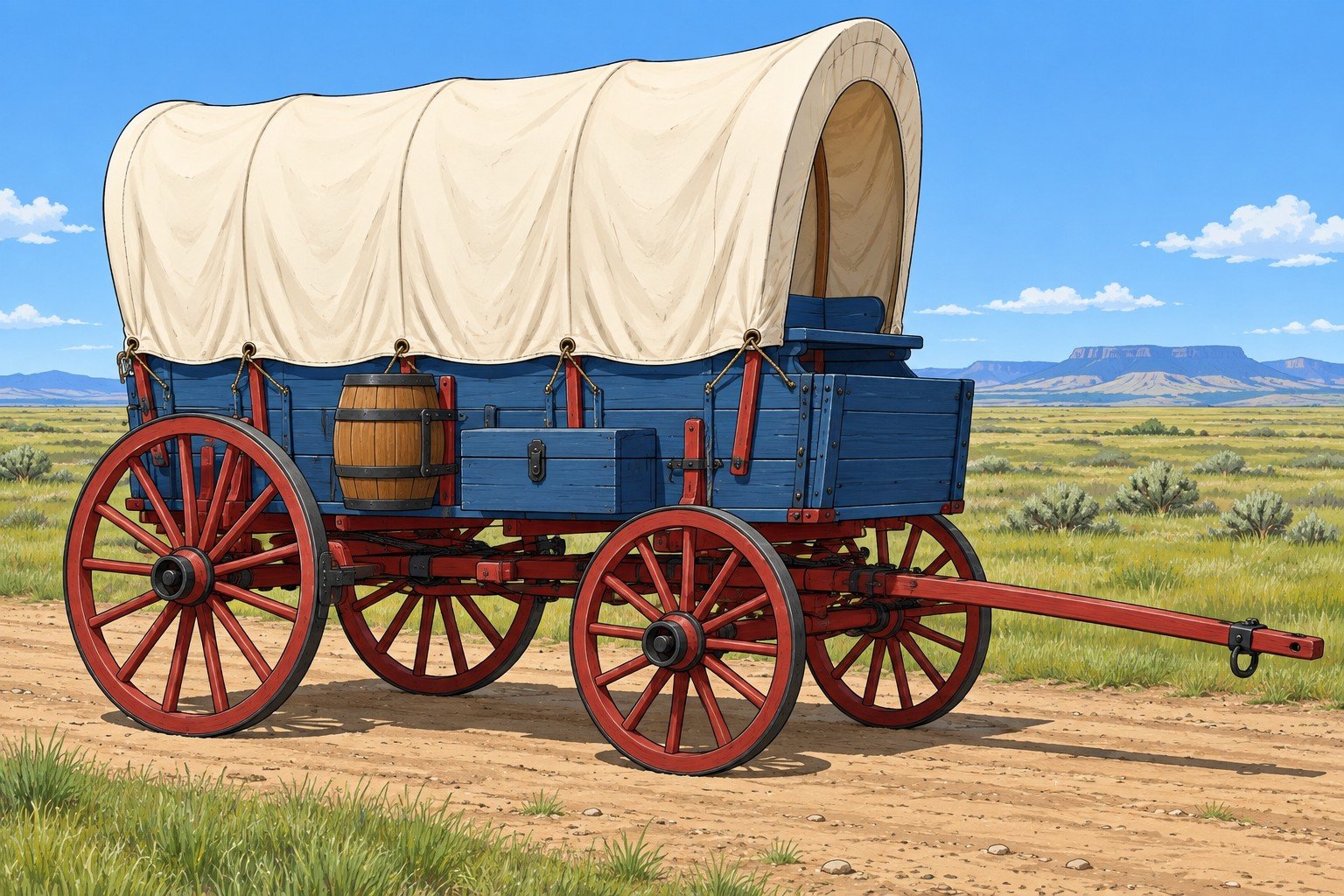
A hired mount is billed by the day at the livery rate and includes feed, stabling and shoeing. A week of hire is billed as six days. The rates are Strahorn's for Cheyenne in 1879 (saddle ponies $2 a day; a team and rig $4 to $7), the mule, buggy and boarding rates are set from nearby figures.
| Hire | Day rate |
|---|---|
| Saddle horse or pony | $2.00 |
| Mule | ~$1.50 |
| Buggy and horse | ~$3.00 |
| Team and rig (a wagon or a buggy and pair) | $5.00 |
| A horse boarded at a livery | ~$1.00 a day; ~$6.00 a week |
A hired heavy freight wagon with four animals is twice the team-and-rig rate. Hired help in town comes at the wage table. The Stable's own Hired Help rates are not used.
Clothing and General Goods
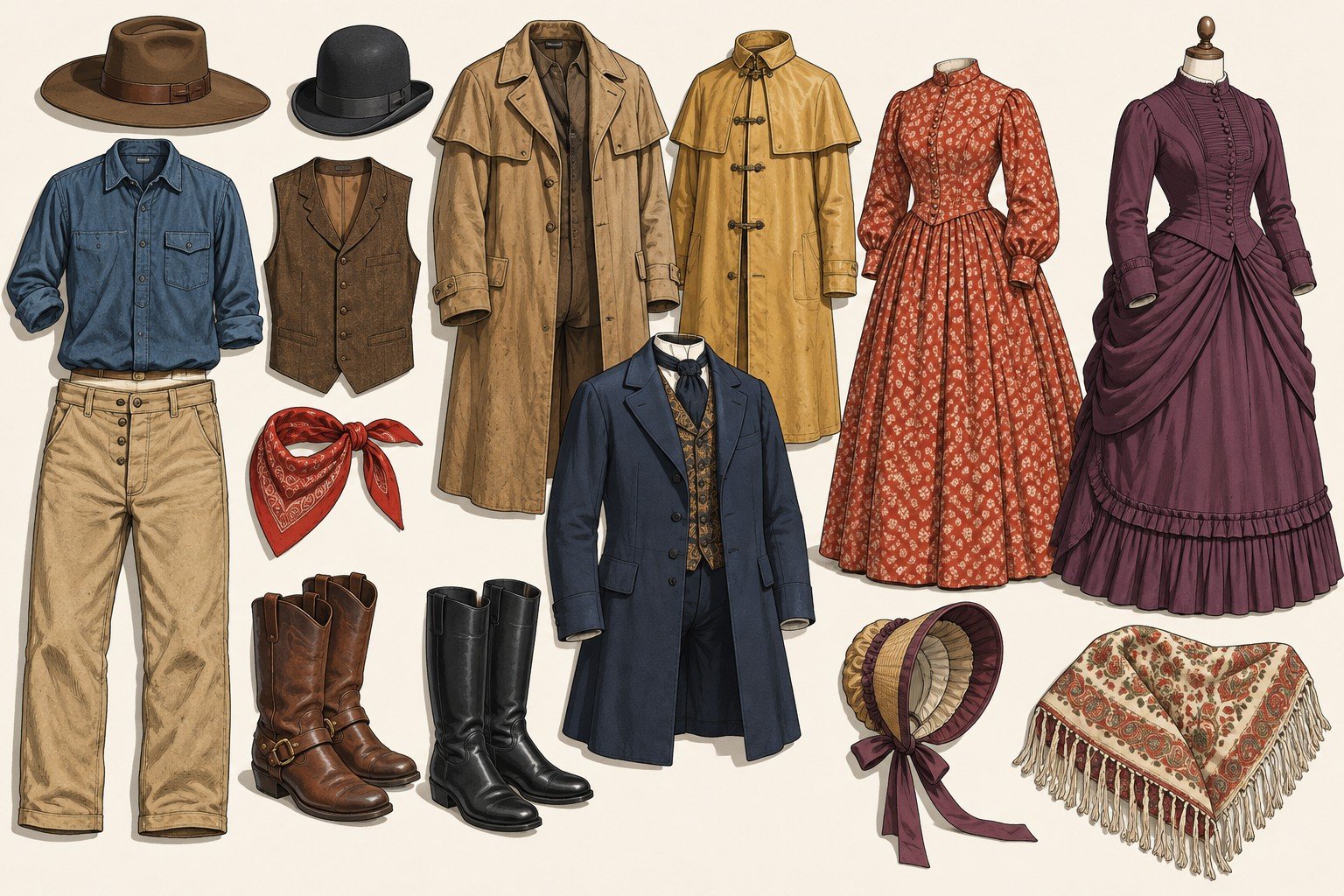
No sourcebook prices clothing, camp goods or tools. The prices are Montgomery Ward's 1875 catalogue and the Cheyenne outfitters' lists; a Cheyenne store adds freight, about a quarter. Figures marked ~ have no corridor source.
Clothing
| Goods | Price |
|---|---|
| A felt hat; a Stetson | $2; $6 |
| A bowler; a straw hat | $2.50; $0.50 |
| Boots: work; good; from a bootmaker | $4; $5; $15 |
| A slicker (rubber or oiled coat); rubber boots | $3; $4 |
| A wool shirt; a work shirt; a calico shirt | $1.50; $0.75; $0.50 |
| Trousers; overalls; a vest | $3.50; $0.70; $2 |
| Undershirt or drawers; socks | $0.60; $0.20 a pair |
| Gloves, buckskin; a neckerchief | $1.25; $0.75 silk, $0.20 cotton |
| A town suit (coat, vest, trousers) | $18 |
| A gown; a calico dress; a bonnet; a shawl | $20; $3; $2; $3 |
| A blanket; a pair | $2.50; $5 |
| A pocket watch: plain silver; a Waltham; gold-filled | $6; $17; $30 |
| Spectacles | $1.50 |
| A trunk; a valise | $5; $2.50 |
| A starter outfit (hat, boots, shirt, trousers, slicker) | $14 |
Camp kit and provisions
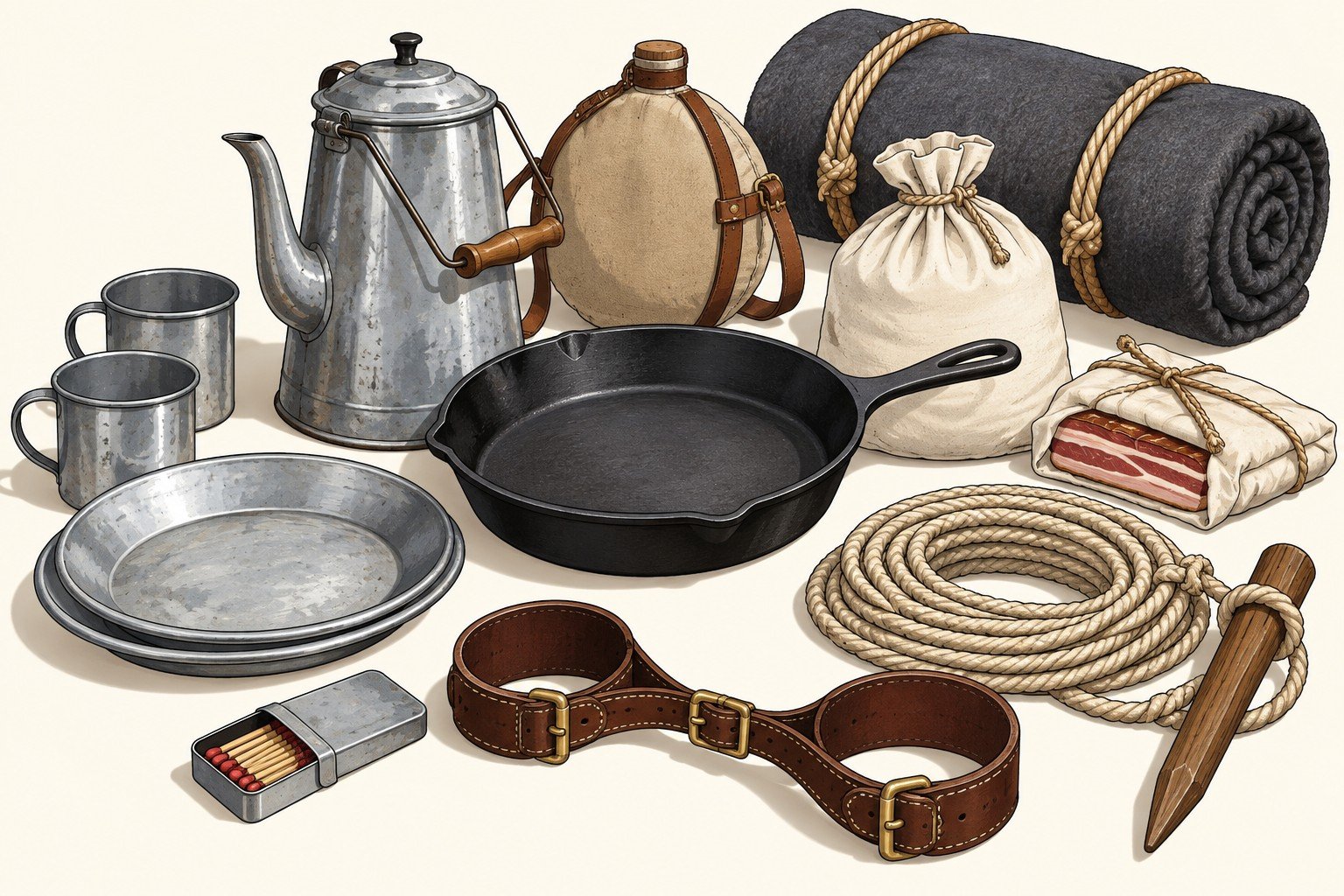
| Goods | Price |
|---|---|
| A bedroll (two blankets and a tarpaulin) | $6 |
| A canteen; a tin cup; a tin plate | $0.50; $0.10; $0.10 |
| A coffeepot; a skillet; a Dutch oven | $0.75; $0.50; $2 |
| A lantern; kerosene, a gallon; matches, a box; candles, a pound | $1; $0.40; $0.05; $0.20 |
| A lariat (rope); a rawhide riata; hobbles; a saddle blanket | $1.50; $6; $0.75; $1.75 |
| A holster and cartridge belt; a surplus flap holster; a shoulder holster | $4; $1; $3 |
| A wall tent (sleeps four); a small A-tent | $30; $10 |
| A week's grub for one on the trail (10 lb flour, 3 lb bacon, coffee, sugar, beans) | $1.50 |
| Flour, 100 lb; bacon, lb; coffee, lb; sugar, lb; beans, lb | $3.75; $0.15; $0.28; $0.13; $0.06 |
| Oats or corn, 100 lb; hay, lb | $2; $0.03 |
| Tobacco, a plug; a cigar | $0.15; $0.05 |
| A deck of cards; poker chips, 100 | $0.35; $2 |
| A Bible; a slate and pencils; a schoolbook; a ledger | $1.50; $0.15; $0.50; $1 |
Tools and trade kits
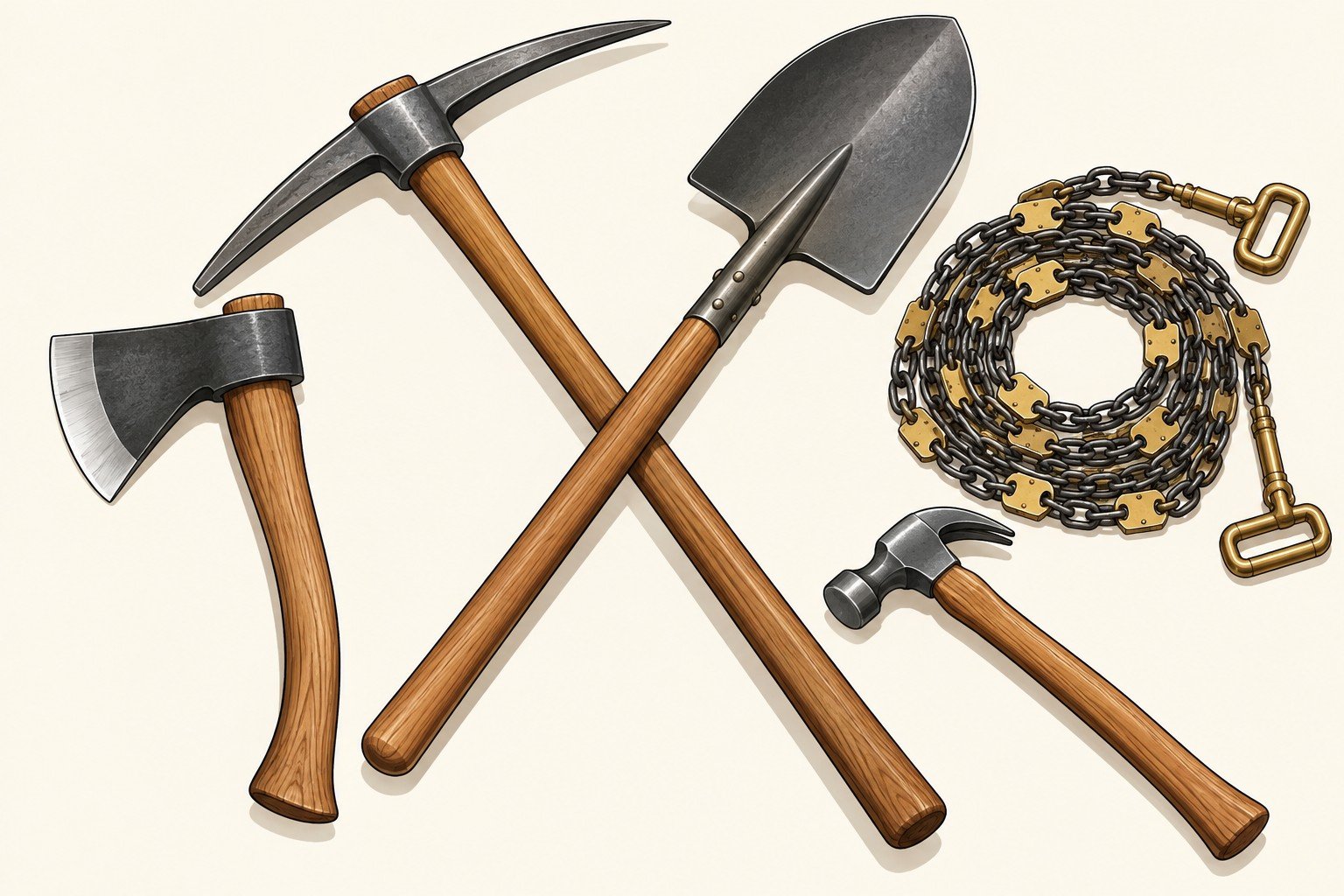
The last eight rows price the kits of the Roles that own a trade (Character Creation and Roles). Most are values set by this book.
| Goods | Price |
|---|---|
| An axe; a hand saw; a shovel; a pick; a hammer | $1.25; $2; $1.25; $1.50; $0.60 |
| A gold pan; a rocker | $0.75; $8 |
| A surveyor's transit; a Gunter's chain; a pocket compass | $200; $10; $2 |
| A doctor's bag with instruments | $25 |
| Manacles, a pair | $3 |
| A string of a dozen steel traps; a skinning knife | $15; $1 |
| A walking plow; a harrow; a scythe and snath | $15; $10; $1.50 |
| A season's seed for a first crop on a quarter section | $50 |
| A law library (statutes, reports and form books) and a seal; a letter book | $100; $1.50 |
| A hand press, used; a case of type; a month's stock of paper | $150; $40; $20 |
| A cipher book (a commercial telegraph code); pens and ink | $2.50; $0.25 |
| Hide-working tools (scrapers, awls, sinew); a parfleche | $2; $1.50 |
| A parfleche of trade goods (cloth, beads, tobacco, powder) | $5 to $20 by what is in it |
Vehicles
The Stable lists the vehicles without a price; every value here is this book's.
| Vehicle | Price |
|---|---|
| A two-horse wagon | $110 |
| A four-horse wagon | $140 |
| A heavy freight wagon | $225 |
| A buckboard; a buggy; a two-wheeled cart | $55; $90; $35 |
| A team and wagon outfit (two Draft Horses, harness, wagon) | $300 |
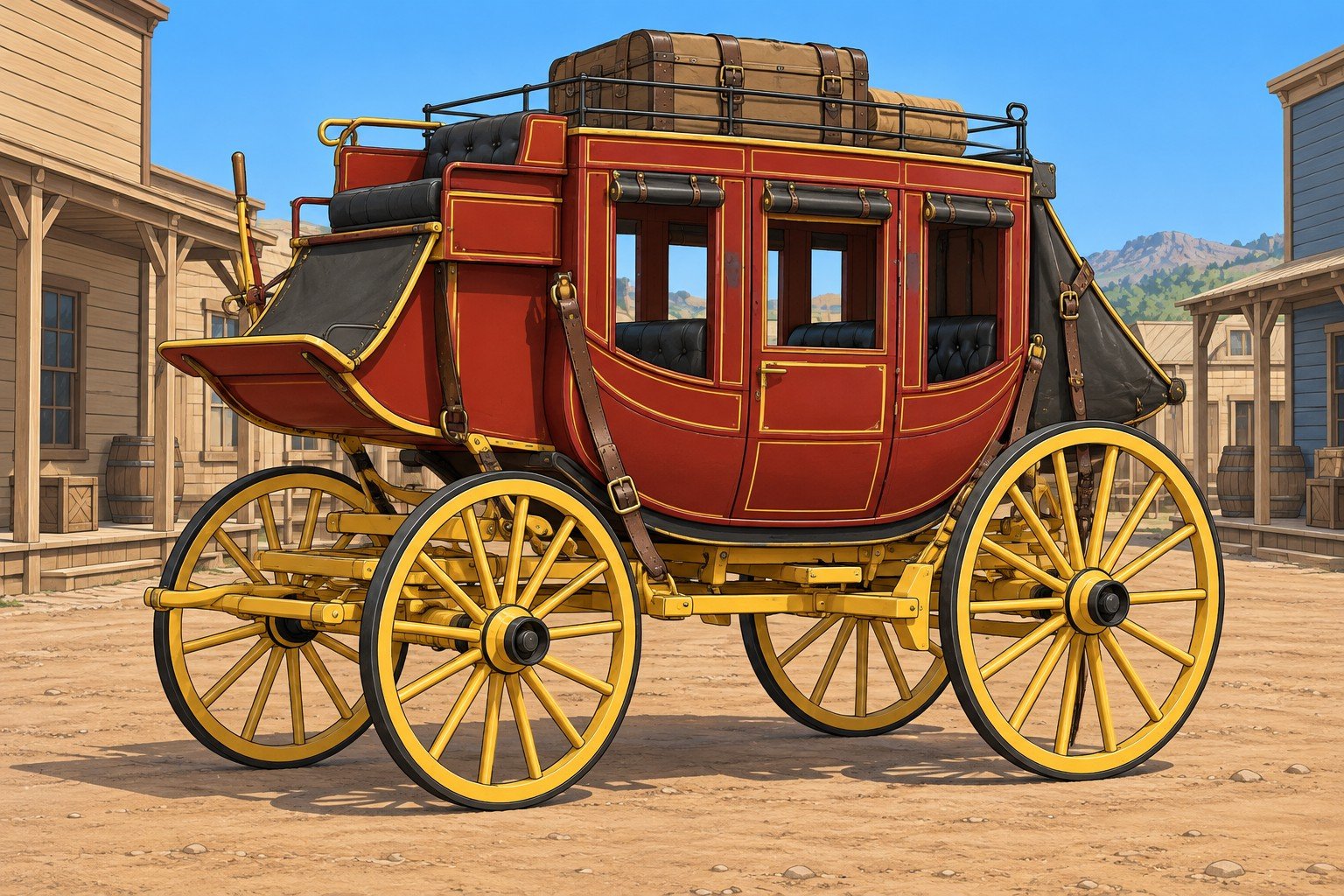
| A Concord coach, as a stage line buys it | $1,200 |
Ammunition is sold by the box. Metallic cartridges for a revolver or a repeater are $1.25 a box of 50 in .44 and $1.50 in .45; rifle cartridges for a Sharps or a Springfield $1 a box of 20; shotgun shells $1 a box of 25, or a brass reloadable shell 5 cents; percussion caps $0.25 a tin of 100; powder $0.75 a pound; bar lead 12 cents a pound and a bullet mould $1; combustible paper cartridges for a cap-and-ball revolver $0.25 a packet of 6; a spare cylinder $3. The Black Powder Armory prices paper cartridges at 15 for a box of twenty, a bandolier of charges at 20 ($1), a powder horn and shot bag at 10 ($0.75) and a spare cylinder at 60, in its own units; the dollars are this book's.
Lodging
| Lodging | Price | Year and source |
|---|---|---|
| First-class hotel (the Inter-Ocean or Railroad House at Cheyenne; the American or Grand Central at Denver) | $3.50 a day; $14 a week | Strahorn 1877 and 1879 ($3 to $4; $12 to $15); Crofutt's stopover rate |
| Boarding house, bed and meals | $7.50 a week, about $1.10 a day | Strahorn 1877 ($6 to $9) and 1879 |
| A furnished room, no board | ~$3 a week | Strahorn 1879 (a Leadville boom price, $5 to $8) |
| A bunk in a lodging house; half of a shared bed | ~$0.50; ~$0.25 | 1870s |
| A cottage of four to six rooms, Cheyenne, by the month | $32 | Strahorn 1879 ($30 to $35) |
| A bath; a shave; a haircut | ~$0.35; ~$0.15; ~$0.25 | 1870s |
| Laundry, a dozen pieces | $1.50 | Strahorn 1879 |
| A bedroll under a wagon or in a stable | free |
A character who lodges in a town pays the cost once, at the start of the stay, and the book treats it as part of the character's living expenses unless the story makes the expense a problem.
Passage
| Journey | Fare | Year and source |
|---|---|---|
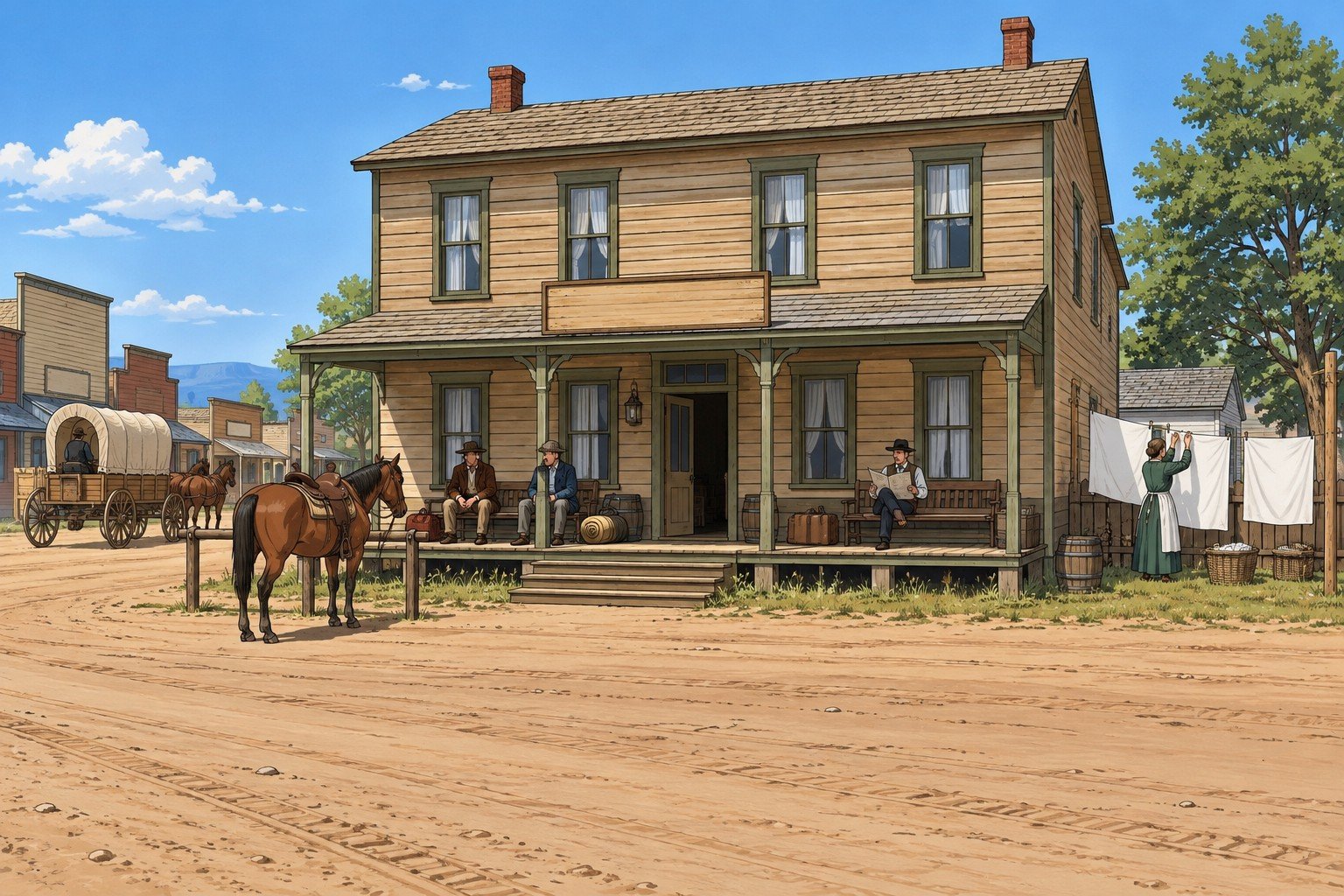
| Omaha to Cheyenne, first class | $38.76 to 1872; $31 by 1877 | Union Pacific Timetable No. 22, 6 December 1869; Strahorn 1877 |
| Omaha to Cheyenne, second class | $31.00 | Union Pacific Timetable No. 24, 24 June 1870 |
| Omaha to San Francisco, first class; second class | $136; $110 | Timetable No. 24, 24 June 1870 |
| Cheyenne to Chicago or St. Louis; to New York | $47; $70 | Strahorn 1877 |
| A sleeping car berth | about $3 a day ($2 in 1870) | Timetable No. 24; Crofutt 1872 and 1874 |
| Cheyenne to Denver, rail | $7 | Strahorn 1877; the Denver Pacific's first train reached Denver on 24 June 1870 (Places and Campaign Tools, Rail Routes). |
| Stage, Bryan to South Pass City (90 miles, three times a week) | $20 | Crofutt 1872 and 1874 |
| Stage, Cheyenne to Custer City (246 miles) | $20 first class, $15 second, $10 third (through tickets) | Cheyenne and Black Hills Stage Line notice of 10 March 1876. An 1876 company report counts 864 passengers to Fort Laramie and 556 to Custer or Deadwood |
| Stage, Cheyenne to Deadwood | $50, meals extra | Strahorn 1877; the stage reached Deadwood from 25 September 1876, after the play range |
| Stage, Cheyenne to Fort Laramie | ~$7 first class; ~$4 third | Derived from the 1876 through fares |
| Stage, Denver to Central City or Georgetown | ~$5 | 1870s |
| A hack in town; the omnibus to the depot | ~$0.50; ~$0.25 | 1870s |
| Wagon freight, Cheyenne to the Black Hills, a pound | 4 cents in summer; 6 in winter | Stage line notice, 10 March 1876 |
| Rail freight, first class, 100 lb: Omaha to Cheyenne; Cheyenne to Denver | ~$3.50; ~$0.75 | Derived from the Union Pacific's 1870 average rate |
| A pack mule or a saddle horse hired for the trip | the livery rate | See Livery |
On the rail, the character is a passenger and the journey is a scene or a sentence. On the road, the Stable's Travel decides.
The Source Book Map
Which sourcebooks this book draws on, what part is legal here, and which rows are echoed. The owning sourcebook is canon for every stat line.
| Sourcebook | Chapter or family | Legal date range in this era | Echoed in this chapter |
|---|---|---|---|
| The Black Powder Armory | Percussion and Cartridge Arms | Cap-and-ball and percussion arms throughout; cartridge revolvers: Smith & Wesson American adopted by the Army 1870, Single-Action Revolver from 1873 | 12 rows (Firearms); dollar prices are this book's |
| The Black Powder Armory | Flintlock Pistols and Flintlock Long Guns | Old stock only; Trade Gun and Long Rifle at half price | Trade Gun |
| The Black Powder Armory | Blades and Boarding Weapons | Lasso from throughout; Sword Cane (Restricted); Socket Bayonet (Military) with the Rifle-Musket | Lasso |
| The Black Powder Armory | Deck and Wall Guns | Gatling Gun: Army only (adopted 1866) | none |
| The Black Powder Armory | Grenadoes, Fire and Powder | Powder Charge, Powder Keg; Dynamite Stick from 1867, mining use | none |
| The Black Powder Armory | Armour of the Powder Age | None in play. No armor is in common use among civilians in 1869 to 1876. Silk Vest, 1840 period, is out of habit | none |
| The Black Powder Armory | The Smokeless Handover | Out of range (after 1884) | none |
| The Fantasy Armory | Daggers and Knives; Axes and Cleavers | Knife, Hatchet, Dagger, Hand Axe throughout | Knife, Hatchet |
| The Fantasy Armory | Impact Weapons | Cudgel, Sap (Restricted) throughout | none |
| The Fantasy Armory | Swords | Army sabers (the Sabre, Military; issued to cavalry and officers, and often left at the post in the field) | none |
| The Ranged Armory | Bows; Ammunition | Short Bow, Horse Bow throughout | Short Bow, Horse Bow, Arrow |
| The Ranged Armory | Crossbows, Siege Engines | Out of range | none |
| The Heavy Armory | Great Guns | Army field guns and howitzers only; Military | none |
| The Stable | Riding; Mounted Combat; Training and Keeping | Throughout | grades and upkeep |
| The Stable | Horses and Their Kin; Beasts of Burden and War | Pony, Riding Horse, Mountain Horse, Mule, Draft Horse, Ox, Donkey throughout | 7 rows (Mounts) |
| The Stable | Tack, Harness, and Platforms | Cart, Wagon, Heavy freight wagon, Coach, throughout; the sourcebook gives no vehicle prices, so the vehicle values in Clothing and General Goods are this book's | 8 rows (Tack) |
| The Stable | Fabled, Air, Water and Dort mounts, Camel, Elephant | Out of range | none |
| The Apothecary | The Apothecary's Shelf; The Industrial Pharmacy | Healing Salve, Poppy Tincture, Strong Drink throughout; Antiseptic from 1867 (Lister's carbolic), Morphine throughout (the hypodermic from the 1850s); Chloroform, Strychnine and Patent Medicine throughout | 8 rows (Medicine) |
| The Apothecary | Treatment and Antidotes; Exposure and the Clock | Throughout | none |
| The Apothecary | Natural Poisons and Venoms | Viper Venom, Hemlock, Nightshade throughout | none |
| The Apothecary | Drugs, Dose, Crash, and Habit; Modern, Stellar | Habit rules throughout; Modern and Stellar out of range | none |
| The Armourer | Medieval and Modern Armour | Out of range, apart from leather and hide work | none |
| The Modern Armory, The Stellar Armory, The Starship Armory, The Chrome Market | all | Out of range | none |
Disease is out of scope in The Apothecary; the Era Rules chapter carries the illness rule.
Hook: The Wrong Brand
A rancher shows a bill of sale for a horse the character thinks is the character's own. The seller named on the paper cannot be found, and the brand has been burned over. A county clerk's book, an old hand who remembers the horse's markings, or a cross-examination will settle whose it is.
Hook: The Honest Buyer
The horse turns up in a livery in a railroad town, sold by a man who is long gone to a buyer who paid fairly for it. The buyer has a family and no money to give it back. The character may take the horse, buy it, or ride on.
Hook: The Thief Is Hungry
The man who took the horse was a drover whose herd was sold out from under him with the wages unpaid. He has the horse and a debt owed to him by a name the character recognizes. The sheriff will hold him for the theft; a hearing will ask about the debt.